Passions Auctions

The worlds of royalty, haute horology, and international auctions occasionally intersect in fascinating ways. One such intersection connects Malaysia’s first Prime Minister, Tunku Abdul Rahman, the prestigious Swiss watchmaker Patek Philippe, and the renowned auction house Bonhams. Through history, craftsmanship, and the preservation of cultural artifacts, these three names form a compelling narrative that highlights how timepieces can transcend mere functionality to become objects of heritage, prestige, and historical significance.


Tunku Abdul Rahman was a pivotal figure in Malaysian history. Born in 1903, he was a prince of the Kedah royal family, hence the title ‘Tunku’. He then became the leader of the political party UMNO before becoming the “Father of Independence” of Malaysia after the country achieved independence from Britain in 1957. His reign marked the beginning of a new era for the Federation of Malaya, and his leadership played a symbolic role in shaping the nation’s identity.


As a member of royalty during the mid-20th century, Tunku Abdul Rahman lived in an era when fine mechanical watches were not only tools for timekeeping but also powerful symbols of prestige and diplomacy. Luxury timepieces were frequently exchanged as gifts among monarchs, diplomats, and political leaders. Such watches often became treasured heirlooms that reflected both personal taste and historical moments.
 

Among the most respected watchmakers during that period was Patek Philippe, a brand long associated with royalty, aristocracy, and collectors of the highest calibre.

Founded in 1839 in Geneva, Patek Philippe has built a reputation as one of the most prestigious watchmakers in the world. Known for its exceptional craftsmanship, complicated movements, and timeless designs, the brand has historically supplied watches to kings, queens, and influential figures.


Many famous royal clients have owned Patek Philippe watches, including European monarchs, Middle Eastern royalty, and Asian rulers. The brand’s motto—“You never actually own a Patek Philippe. You merely look after it for the next generation”—captures the idea that these watches are objects meant to be preserved and passed down through time.


During the mid-20th century, it was common for world leaders and royal families to commission or receive special watches from the brand. These timepieces often featured personalized engravings, coats of arms, or commemorative inscriptions marking important events such as coronations, diplomatic visits, or national celebrations.


It is within this tradition that a watch associated with Tunku Abdul Rahman emerged as an important historical artifact.

When a watch connected to a prominent historical figure appears at auction, it attracts considerable interest from collectors, historians, and horology enthusiasts. Provenance adds significant value to a watch because it transforms the object from a luxury accessory into a piece of living history.

In some cases, watches once owned by monarchs or political leaders have surfaced at auctions, drawing global attention due to their rarity and historical importance.
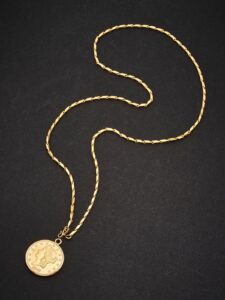
One of the most compelling links between the three entities involves a watch connected to Tunku Abdul Rahman that was produced by Patek Philippe and later handled by Bonhams.

Royal watches are particularly fascinating because they carry both horological and political significance. A watch owned by a monarch is more than just a precision instrument; it becomes a symbol of an era, representing the cultural tastes and historical context of its owner.


In the case of Tunku Abdul Rahman, the watch attributed to him reflected the elegance and prestige associated with royal patrons of Swiss watchmaking. Such watches were typically crafted with exceptional attention to detail, often featuring precious metals such as gold and elegant minimalist designs typical of mid-century Patek Philippe models.


When a watch of this nature appears at auction, collectors are drawn not only to the brand name but also to the story behind the piece. Provenance connected to a national leader or monarch significantly enhances both its cultural value and its desirability among collectors.


The exact Patek Philippe model associated with Tunku Abdul Rahman that appeared at auction is the:

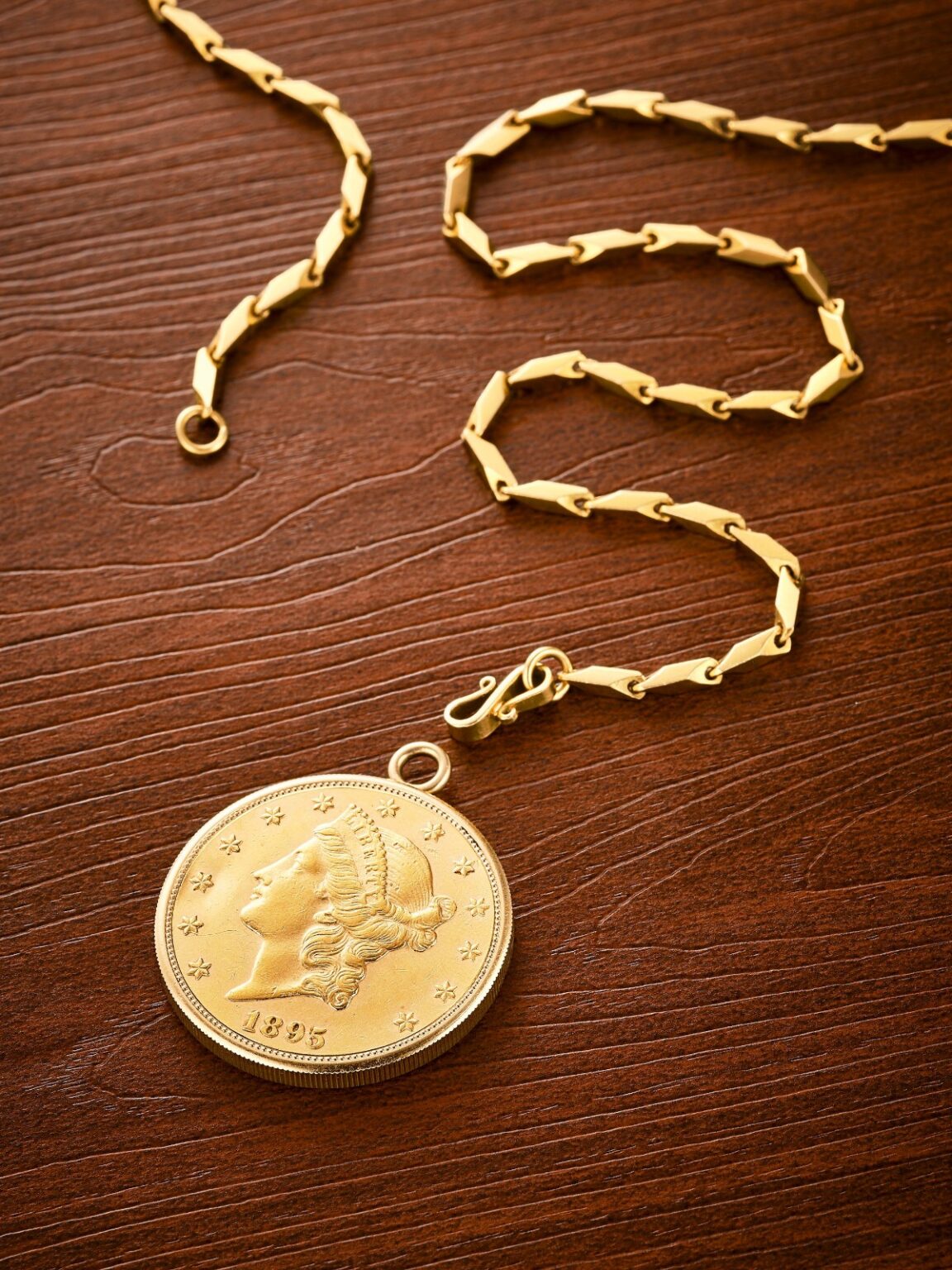
Patek Philippe Reference 803 Coin Watch

This historically significant watch was sold through Bonhams and is considered a rare collector’s piece because of both its unusual design and its royal Malaysian provenance.


Model: Patek Philippe Reference 803 Coin Watch

Year: Circa 1969 (presentation year)

Movement: Manual winding Calibre 99P

Case Size: 35 mm

Material: 18k yellow gold

Unique Feature: Made from an 1895 United States $20 Double Eagle gold coin with a concealed dial.


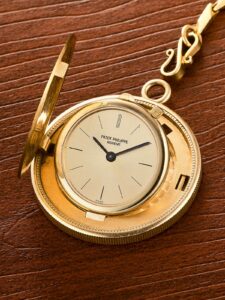
The watch belongs to Patek Philippe’s rare coin watch series (references 800–809). These watches were created using historic gold coins, which acted as a hinged cover. When the coin face is opened using a discreet latch, the hidden watch dial appears underneath.
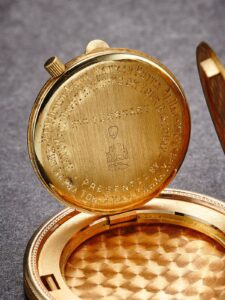
 

The particular example linked to Tunku Abdul Rahman carries an engraving indicating it was presented to him as a birthday gift on the 8th of February 1969. The watch was reportedly given by the wife of Mustapha Harun (Tun Datuk Toh Puan Rahimah Mustafa), who was the first Governor of Sabah, as a commemorative gift. The watch remained in his possession until 1976, when he gifted it to his granddaughter on her 16th birthday.


This watch later appeared in a major watch auction held by Bonhams in Hong Kong, the buyer remains anonymous.

Auction result:

Sold for HK$217,600 (including premium)

Auction: Echoes of Time: Rare Timepieces from the Pages of History

Date: 25 November 2025


One of the most fascinating aspects of the Patek Philippe Reference 803 Coin Watch is its hidden-dial mechanism, which makes the watch appear at first glance to be nothing more than a gold coin.
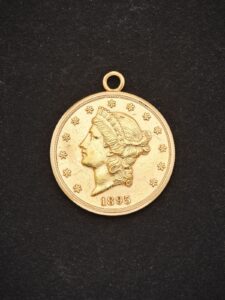
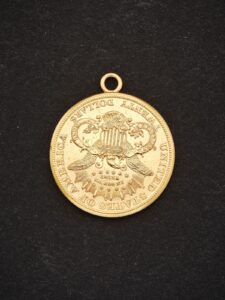
 

At first sight, the watch looks exactly like a United States $20 Double Eagle gold coin. The front of the coin displays the classic Lady Liberty portrait, while the reverse shows the American bald eagle.


The coin itself forms the outer case of the watch. Patek Philippe craftsmen carefully hollowed out the coin while preserving the original design on both sides. The result is a watch that looks like a normal coin when closed.
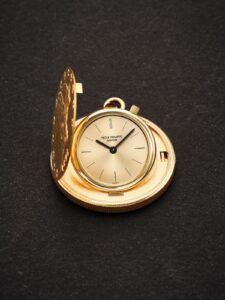
 

Collectors often describe this as a “secret watch” because no dial is visible until the coin is opened. A small thumbpiece is integrated into the coin’s ridged edge, when pressed the cover springs open revealing a miniature mechanical watch dial. The hinge and button are so well integrated that many do not

realise that the coin is actually a watch.

Over the years Passions has sold a few such gold coin watches signed by Vacheron & Constantin and recently a Piaget made for Cartier. For more interesting and rare watches, please register and subscribe with us for updates. (www.passions.sg)

*All photographs are courtesy of Bonhams HK
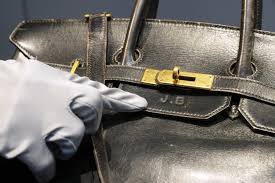
10 MINUTES. ONE HANDBAG. $10 MILLION

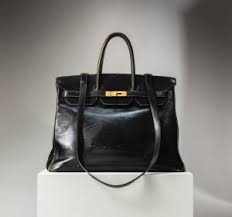
An icon is born. Jane Birkin’s original Hermes Birkin bag sold at a whopping $10.1 million in Sotheby’s, Paris in July 2025.

Where, one may ask, did this phenomenon begin? Surprisingly, the story behind this record-breaking sale began with an encounter at 30,000 feet in the air between British actress and singer, Jane Birkin and CEO of Hermes, Jean-Louis Dumas. As the story goes, in 1983, Jane was struggling with her travel bag (a straw tote) which had spilled its contents in the overhead compartment. Now frustrated, she mentioned this to her ‘flight neighbour’ Dumas.

Now Jane wanted something practical, spacious, yet stylish – a bag that could carry her belongings yet look chic. Dumas, who was seated next to her, pulled out an airplane ‘sick bag’ and began sketching a design based on Jane’s description. This casual and spontaneous moment sparked the creation of one of the most exclusive fashion pieces in history.

In 1984, the first Hermes Birkin bag was handcrafted specifically for Jane Birkin herself. The bag was a fusion of practical elegance.Made with the signature Hermes craftsmanship it had:


  • Boxy structure and reinforced base, allowing it to stand upright
  • Top flap and turn-lock closure, secured with a padlock and key
  • Two rolled leather handles for hand carrying
  • Hermès signature saddle stitching, completed entirely by hand
  • High-quality leathers, such as Togo, Clemence, or Epsom

What made the Birkin stand out was not only its look, but the care and time it took to create each piece. Though the bag was initially designed for Jane Birkin, it quickly caught the attention of fashion lovers, socialites, and celebrities. The blend of luxury and utility was rare — this wasn’t a dainty handbag; it was a power piece.

By the 1990s, the Birkin bag became synonymous with wealth, exclusivity, and refined taste. With waitlists that reportedly stretched to years, owning a Birkin became both a style statement and a mark of elite status.

Today, the Hermès Birkin is a cultural and financial powerhouse. It’s been featured in films, referenced in songs, and flaunted in paparazzi shots. But it’s also revered by true fashion lovers for its artistry. The Birkin is set apart from the rest as they take pride in their exclusivity, customization, investment value and the celebrity culture, from Victoria Beckham, to Kim Kardashian, Lady Gaga and Cardi B, who have showcased the Birkin as the ultimate fashion flex.

Today, the Hermès Birkin is a cultural and financial powerhouse. It’s been featured in films, referenced in songs, and flaunted in paparazzi shots. But it’s also revered by true fashion lovers for its artistry. The Birkin is set apart from the rest as they take pride in their exclusivity, customization, investment value and the celebrity culture, from Victoria Beckham, to Kim Kardashian, Lady Gaga and Cardi B, who have showcased the Birkin as the ultimate fashion flex.


Each Birkin is unique, thanks to variations in leather grains, patinas, and craftsmanship. Some of the most famous and rare Birkins include:


  • Himalaya Birkin: Made from Niloticus crocodile and dyed to resemble the snow-capped Himalayas — one of the rarest and most expensive Birkins ever sold.
  • So Black Birkin: A black-on-black version with black hardware — mysterious and chic.
  • Mini Birkins: Petite versions that are perfect for evening wear yet still command enormous resale value.


Although the bag bears her name, Jane Birkin herself had mixed feelings about it. She was never one to chase luxury or glamour, and often poked fun at the bag’s reputation.


She once auctioned her personal Birkin for over £100,000 to raise money for relief efforts in Haiti. In 2015, she made headlines by requesting her name be removed from the crocodile-skin versions of the Birkin after learning about the conditions of exotic animal farms. Hermès later assured her that it was committed to ethical sourcing, and the issue was resolved.


Despite these controversies, Jane’s name remains forever tied to one of fashion’s most iconic creations.


The winning bidder? Shinsuke Sakimoto (the CEO of Valuence – a Japanese luxury resale trailblazer with an appetite for history making moves). For Sakimoto the win was not for nostalgia but a statement that the past can be just as seductive as the future. In the 10 charged minutes which sparked a bidding war amongst 9 bidders, the coveted leather handbag transformed into the most expensive ever sold. 

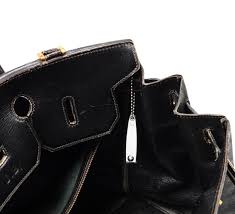
This smooth tan leather handbag, engraved with Jane Birkin’s initials and with a humble nail clipper dangling from the strap, reminds everyone that style doesn’t care for convention. Though well-worn, scratched, and scuffed in places — the way only a heavily used everyday bag can be — it emerged into the spotlight.

The first Birkin was never part of a grand marketing strategy or product launch. It was born from a simple conversation between two people — a creative mind and a woman in search of something different. More than 40 years later, the original Birkin bag has become a piece of history, a symbol of craftsmanship, and proof that practicality and luxury can come together in the most unexpected way.

This article references details from Sotheby’s auction records and statements by Shinsuke Sakimoto, founder of Valuence Japan.

Art itself is a wide spectrum. It surrounds a multifaceted concept that encompasses various forms of human expression and creativity. Its meaning can be interpreted in numerous ways, depending on cultural, social, personal, and philosophical contexts.Art allows individuals to express emotions, thoughts, and feelings that might be difficult to convey through words alone.Through visual, auditory, and performative means, art can tell stories, share experiences, and document historical events. Religious aspects can also be found in art where visual representation of religious ideologies and their relationship with humans are depicted.


The history of art spans over thousands of years and encompasses a vast array of cultures, styles and movements. Art focuses on objects made by humans from different cultures across the globe throughout history with a primary emphasis on its aesthetic value. Visual arts can be divided into 2, fine arts and applied arts. History of arts itself is often depicted as a chronology of masterpieces created during each civilization. 


Prehistoric art includes a broad range of art including some human artefacts. Amongst the first art and containers were discovered from the Middle Stone Age in South Africa dating more than 100,000 years ago. One of the more renowned form of art in the form of prehistoric statuettes known as Venus figurines (exaggerated breasts and bellies, small heads, wide hips, and legs that taper to a point) the most famous ones being Venus of Hohle Fels (Germany) and Venus of Willendorf (Austria).

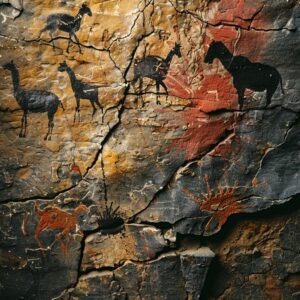
The best known prehistoric artworks are the cave paintings depicting animals. There are several hundreds of these, namely Lascaux and Dordogne; France; Ukraine; Italy; Spain; and Great Britain. Many theories surround the purpose of these art namely religious and to evoke hunting success. Neolithic art was characterised by a more settled community thus showing emergence of pottery, weaving and even some megalithic structures like the Stonehenge.


Ancient Egyptian art is known for its monumental structures like the pyramids which contain detailed hieroglyphics and statutes of pharaohs. The ancient Egyptian artworks served as an essential functional purpose bound with religion and ideology. The more renowned statue would be the Mask of Tutankhamun (1327 BCE) which was a gold funerary mask of the 18th Dynasty pharaoh Tutankhamun. It was excavated by Howard Carter in 1925 after over 3000 years now being displayed in the Egyptian Museum (Cairo). Another notable Egyptian art in the form of a structure is the largest Egyptian pyramid known as the Great Pyramid of Giza which served as the tomb of Egyptian pharaoh Khufu who ruled during the 4th dynasty. Built in 2600 BCE over a 27 year period, this pyramid is the oldest of the 7 wonders of the world and the only wonder that has remained largely intact.

Roughly around the same timeline saw the emergence of mesopotamian art like ziggurats, relief sculptures and cuneiform inscriptions. The ziggurat was built in the ancient times as part of a temple complex that included other buildings. The word ziggurat comes from the Assyrian word ‘zaqarum’ (meaning height, pinnacle, to be high up). For example the Ziggurat of UR is a neo-sumerian ziggurat built by KIng Ur-Nammu dedicated in honour of the Mesopotamian moon God in approximately 21st century BCE. Cuneiform is a logo-syllabic writing system that was used to write actively from the early bronze age until the beginning of the common era. Through the course of history, cuneiform has been adopted to write a number of languages. Another civilization that developed here was the Akkadian Empire which is the world’s first great empire.

Assyria then dominated with cities filled with detailed stone reliefs depicting scenes of court life, religious practices, hunting and epic battles. This was followed by the Babylonians where visitors were greeted with the impressive Ishtar Gate, its walls covered in vivid blue glazed bricks and reliefs depicting dragons, bulls and lions, named after Ishtar the Goddess of War and Love.


The Achaemenid Empire ruled by King Cyrus II came next. Persepolis (now Iran) depicted art celebrating its wealth and power, full of impressive sculptures of religious images and the ruins of a palace.


Roman art is a very broad topic, spanning almost 1,000 years and three continents, from Europe and Africa and Asia. The first Roman art can be dated back to 509 B.C.E., with the legendary founding of the Roman Republic, and lasted until 330 C.E.

The English word ‘wine’ comes from an early borrowing of the Latin word vinum. The history of wine spans thousands of years and is closely intertwined with human civilization and culture. The earliest known traces of wine are from Georgia (6000 BCE), Iran [now known as Persia] (5000 BCE), Armenia (4100 BCE) and Sicily (4000 BCE). Wine reached the Mediterranean Basin in the early Bronze Age and was consumed throughout history for its intoxicating effects mainly for celebrations by ancient civilizations like Greece and Rome. The earliest known evidence of wine production dates back to a region now known as Georgia around 6000 BCE where both archaeological & genetic findings included ancient pottery with residual traces of grape wine. 

The altered consciousness of wine has been considered religious since its origin. The ancient Greeks worshipped Dionysus (the God of wine-making, orchards and fruit, vegetation, fertility, festivity, insanity, and theatre). His discovery of viticulture at Mount Nysa was rewarded as the God of Wine also known as Bachus. This cult was carried on by the ancient Romans. The consumption of ritual wine (probably sweet wine originally) was part of a Jewish practice since Biblical times, also commemorating Jesus’ Last Supper (incorporated in it) wine became even more essential to the Christian Church. The Biblical book of Genesis first mentions the production of wine by Noah following the Great Flood (between 5th and 3rd Century BCE).


Albeit Islam nominally forbade the production or consumption of wine, Geber (Jabir Ibn Hayyan – an Islamic alchemist) pioneered wine’s distillation for medicinal and industrial (in the form of perfume) purposes. Wine production and consumption increased beginning 15th century CE as part of the European expansion. This is despite the grape phylloxera (an insect pest of grapevines worldwide) in 1887. 

The earliest known winery from 4100 BCE is the “Areni-1” cave in Vayots Dzor, Armenia. The earliest evidence of fermented alcoholic beverages of rice, honey & fruit which is sometimes compared to wine was claimed in China around 7000 BCE. This winery site contained a wine press, fermentation vats, jars, and cups. Archaeologists also found vitis vinifera seeds and vines. This grape is still used to make wine.

There are various types of wine:-

  • Red Wine – made from blue grapes with its skin
  • White Wine – made from green grapes or destemmed blue grapes without skin
  • Rose Wine – blue grapes incorporating some of the colour from the grape skins but not enough to qualify as Red Wine.
  • Orange Wine – green grapes with skin.
  • Sparkling Wine – made from both green and blue grapes
  • Champagne – a form of Sparkling Wine that originated in France
  • Fortified Wine – wine with a higher alcohol content
  • Ice Wine – wine with low alcohol content and a sweet taste
  • Dessert Wine – wine served with dessert 

Though these categories are similar, they are indeed different. In General the type of grape and the amount of skin contact determines the colour and style of the wine. Wines however are not limited to grapes alone but other fruits as well, for example, apple (apple wine), honey (honey wine), starch (barley wine/ rice wine). These are generically called fruit wine or vin de pays (a French term). Most fruits naturally lack either sufficient fermentable sugars, proper amount of acidity, sufficient yeast to promote or maintain fermentation, or a combination, this is in comparison with the suitability of grapes. 

In the United States of America, for a wine to be vintage-dated, and labelled with a country of origin or American Viticulture Area (AVA), 95% of its volume must be from grapes harvested that year. If it is not labelled with a country of origin or AVA, the percentage is reduced to 85%. These wines are generally bottled in a singular batch resulting in each bottle producing a similar taste.


Significant changes on the character of a wine from the same vineyard could be due to climate. Thus vintage wines are produced to be individually characteristic of the particular vintage and serve as the flagship wines of the producer. Superior vintages from reputable producers and regions will often command much higher prices than their average ones. Non-vintage wines can be blended from more than one vintage to help wine-makers sustain a reliable market image and maintain sales revenue.


Wine tasting is the sensory examination and evaluation of wine. The sweetness is determined by the amount of residual sugar in the wine after fermentation relative to the acidity present in the  wine. Dry wine has a small amount of residual sugar. Some wine labels suggest opening the bottle and letting the wine ‘breathe’ for a few hours before serving, this method is known as decanting (where the wine is poured into a special container just for breathing). Decanting with a filter allows the removal of bitter sediments (more common in  older wine) that may have been formed in the wine. During aeration, (more suitable for younger wine) the exposure to air often ‘relaxes’ the drink; making it smoother and better integrated in aroma, texture and flavour. Aeration is not recommended for older wine as it tends to fade (loss of character and flavour intensity).

Experienced tasters can distinguish flavour characteristics of a specific grape and flavours that result from other factors (including some intentional elements like chocolate, vanilla or coffee). Other points to note are the vertical and horizontal tasting, where in the latter, the wines are from the same vintage but different wineries. Wine aroma comes from volatile compounds released in the air, vaporisation of these compounds can be accelerated by twirling the glass or serving the wine at room temperature. Many drinkers however prefer to chill red wines like Chinon and Beauolais. In discussing the temperature of wines, different types are recommended at different temperature, for example, White Wine -13℃ / 55℉, Red Wines however are perceived best served chambre (room temperature) like Pinot Noir at 16℃ / 61℉ or at 18℃ / 64℉, Cabaret Sauvignon, Zinfandel and Rhone at 18℃ / 64℉ or 21℃ / 70℉.


Outstanding vintages from the best vineyards may sell for thousands per bottle. Fine wine covers USD 30 to USD 50 and investment wines are considered as Veblen goods (valuable). The most notable was a ‘Chateau d’Yquem’, a 135 year old vertical, containing every vintage from 1860 to 2003 which was sold for USD 1.5 million. The most common wines purchased for investments include Bordeaux and Burgundy (cult wines), scored highly by Robert Parker who is a retired American wine critic, from Europe and elsewhere, Port wine (wine produced in Douro Valley of North Portugal – a sweet red wine).


Characteristics of highly collectible wines include a proven track record of holding well over time, a long drinking-window plateau (period for maturity and approachability), consensus among experts on quality of the wine, and a vigorous production method at every stage including grape selection and barrel ageing.