Passions Auctions

The worlds of royalty, haute horology, and international auctions occasionally intersect in fascinating ways. One such intersection connects Malaysia’s first Prime Minister, Tunku Abdul Rahman, the prestigious Swiss watchmaker Patek Philippe, and the renowned auction house Bonhams. Through history, craftsmanship, and the preservation of cultural artifacts, these three names form a compelling narrative that highlights how timepieces can transcend mere functionality to become objects of heritage, prestige, and historical significance.


Tunku Abdul Rahman was a pivotal figure in Malaysian history. Born in 1903, he was a prince of the Kedah royal family, hence the title ‘Tunku’. He then became the leader of the political party UMNO before becoming the “Father of Independence” of Malaysia after the country achieved independence from Britain in 1957. His reign marked the beginning of a new era for the Federation of Malaya, and his leadership played a symbolic role in shaping the nation’s identity.


As a member of royalty during the mid-20th century, Tunku Abdul Rahman lived in an era when fine mechanical watches were not only tools for timekeeping but also powerful symbols of prestige and diplomacy. Luxury timepieces were frequently exchanged as gifts among monarchs, diplomats, and political leaders. Such watches often became treasured heirlooms that reflected both personal taste and historical moments.
 

Among the most respected watchmakers during that period was Patek Philippe, a brand long associated with royalty, aristocracy, and collectors of the highest calibre.

Founded in 1839 in Geneva, Patek Philippe has built a reputation as one of the most prestigious watchmakers in the world. Known for its exceptional craftsmanship, complicated movements, and timeless designs, the brand has historically supplied watches to kings, queens, and influential figures.


Many famous royal clients have owned Patek Philippe watches, including European monarchs, Middle Eastern royalty, and Asian rulers. The brand’s motto—“You never actually own a Patek Philippe. You merely look after it for the next generation”—captures the idea that these watches are objects meant to be preserved and passed down through time.


During the mid-20th century, it was common for world leaders and royal families to commission or receive special watches from the brand. These timepieces often featured personalized engravings, coats of arms, or commemorative inscriptions marking important events such as coronations, diplomatic visits, or national celebrations.


It is within this tradition that a watch associated with Tunku Abdul Rahman emerged as an important historical artifact.

When a watch connected to a prominent historical figure appears at auction, it attracts considerable interest from collectors, historians, and horology enthusiasts. Provenance adds significant value to a watch because it transforms the object from a luxury accessory into a piece of living history.

In some cases, watches once owned by monarchs or political leaders have surfaced at auctions, drawing global attention due to their rarity and historical importance.
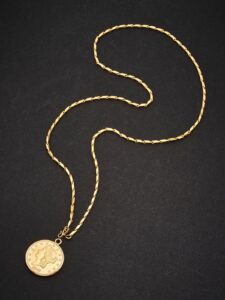
One of the most compelling links between the three entities involves a watch connected to Tunku Abdul Rahman that was produced by Patek Philippe and later handled by Bonhams.

Royal watches are particularly fascinating because they carry both horological and political significance. A watch owned by a monarch is more than just a precision instrument; it becomes a symbol of an era, representing the cultural tastes and historical context of its owner.


In the case of Tunku Abdul Rahman, the watch attributed to him reflected the elegance and prestige associated with royal patrons of Swiss watchmaking. Such watches were typically crafted with exceptional attention to detail, often featuring precious metals such as gold and elegant minimalist designs typical of mid-century Patek Philippe models.


When a watch of this nature appears at auction, collectors are drawn not only to the brand name but also to the story behind the piece. Provenance connected to a national leader or monarch significantly enhances both its cultural value and its desirability among collectors.


The exact Patek Philippe model associated with Tunku Abdul Rahman that appeared at auction is the:

Patek Philippe Reference 803 Coin Watch

This historically significant watch was sold through Bonhams and is considered a rare collector’s piece because of both its unusual design and its royal Malaysian provenance.


Model: Patek Philippe Reference 803 Coin Watch

Year: Circa 1969 (presentation year)

Movement: Manual winding Calibre 99P

Case Size: 35 mm

Material: 18k yellow gold

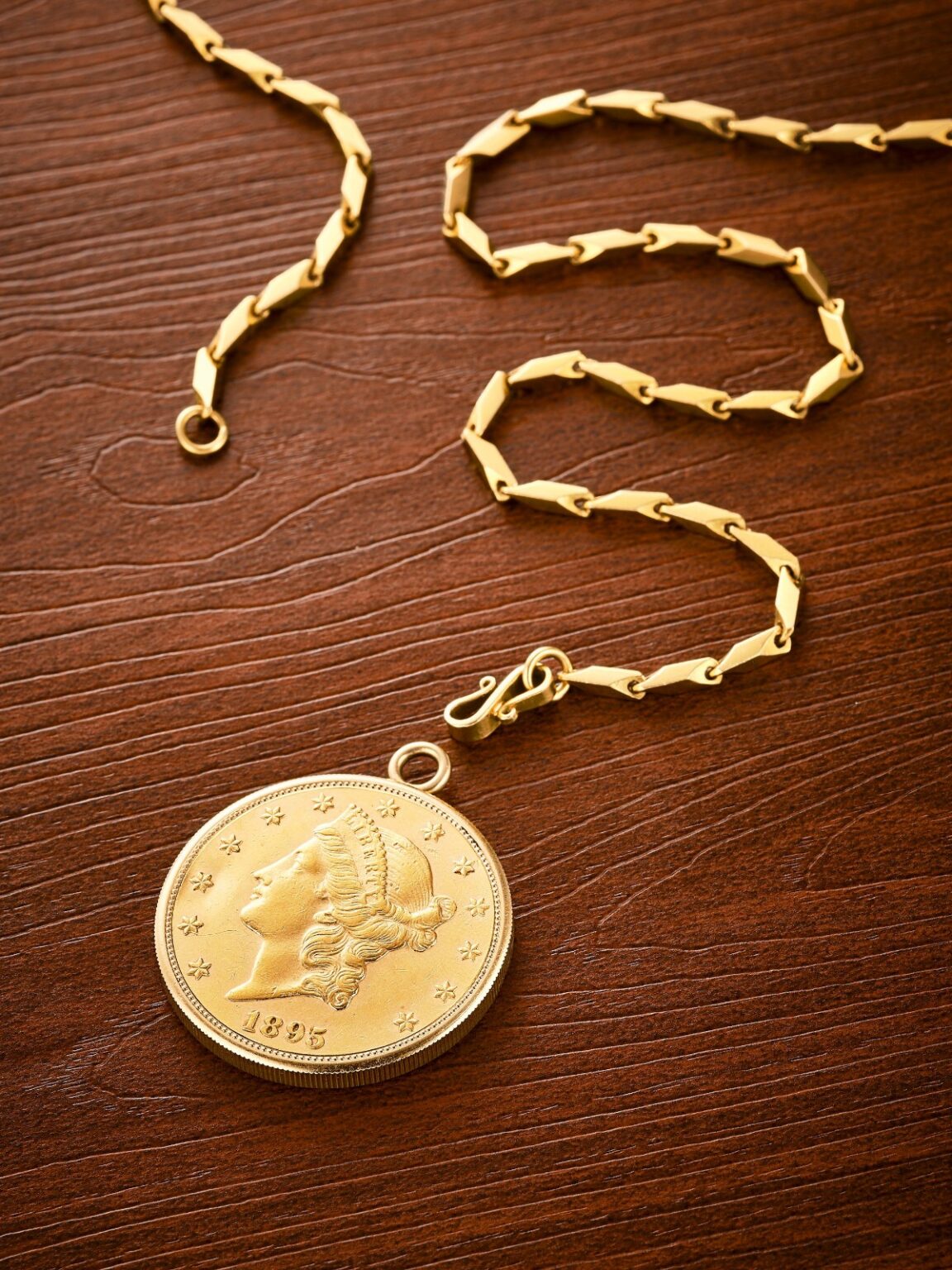
Unique Feature: Made from an 1895 United States $20 Double Eagle gold coin with a concealed dial.


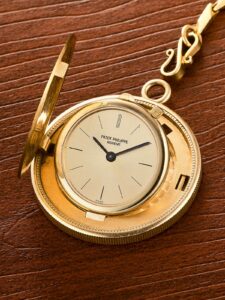
The watch belongs to Patek Philippe’s rare coin watch series (references 800–809). These watches were created using historic gold coins, which acted as a hinged cover. When the coin face is opened using a discreet latch, the hidden watch dial appears underneath.
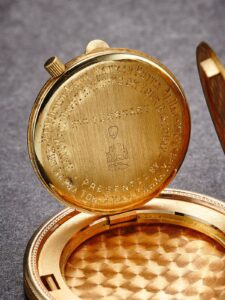
 

The particular example linked to Tunku Abdul Rahman carries an engraving indicating it was presented to him as a birthday gift on the 8th of February 1969. The watch was reportedly given by the wife of Mustapha Harun (Tun Datuk Toh Puan Rahimah Mustafa), who was the first Governor of Sabah, as a commemorative gift. The watch remained in his possession until 1976, when he gifted it to his granddaughter on her 16th birthday.


This watch later appeared in a major watch auction held by Bonhams in Hong Kong, the buyer remains anonymous.

Auction result:

Sold for HK$217,600 (including premium)

Auction: Echoes of Time: Rare Timepieces from the Pages of History

Date: 25 November 2025


One of the most fascinating aspects of the Patek Philippe Reference 803 Coin Watch is its hidden-dial mechanism, which makes the watch appear at first glance to be nothing more than a gold coin.
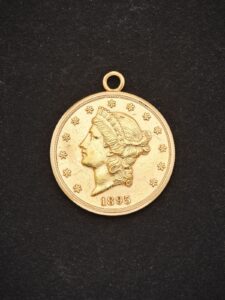
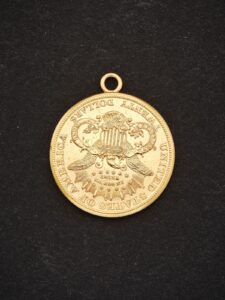
 

At first sight, the watch looks exactly like a United States $20 Double Eagle gold coin. The front of the coin displays the classic Lady Liberty portrait, while the reverse shows the American bald eagle.


The coin itself forms the outer case of the watch. Patek Philippe craftsmen carefully hollowed out the coin while preserving the original design on both sides. The result is a watch that looks like a normal coin when closed.
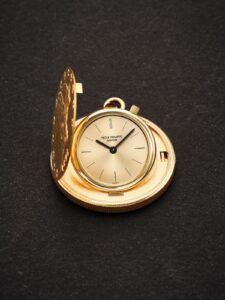
 

Collectors often describe this as a “secret watch” because no dial is visible until the coin is opened. A small thumbpiece is integrated into the coin’s ridged edge, when pressed the cover springs open revealing a miniature mechanical watch dial. The hinge and button are so well integrated that many do not

realise that the coin is actually a watch.

Over the years Passions has sold a few such gold coin watches signed by Vacheron & Constantin and recently a Piaget made for Cartier. For more interesting and rare watches, please register and subscribe with us for updates. (www.passions.sg)

*All photographs are courtesy of Bonhams HK

Greetings all,

8-9 NOVEMBER 2025

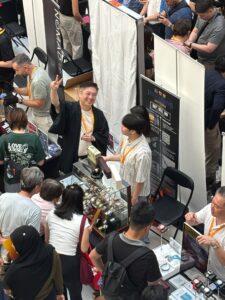
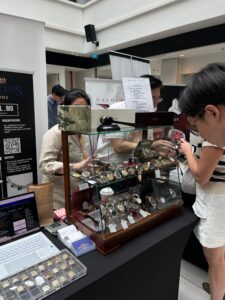
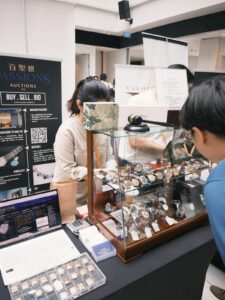
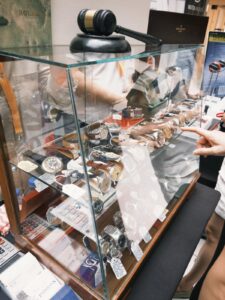
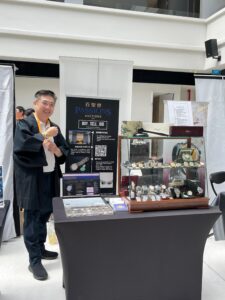
Passions Auctions took part in this successful annual watch fair held in Singapore and this is the 4th edition. The two days event was held in the National Design Center at Middle Road. There were almost sixty vendors from eighteen countries, a record which attracted thousands of visitors from the region.

https://www.spring-sprang-sprung.com/pages/passionsauctions

10 MINUTES. ONE HANDBAG. $10 MILLION

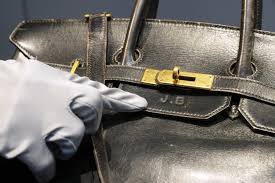
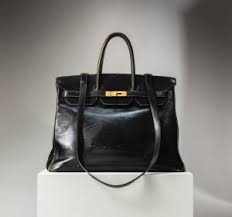
An icon is born. Jane Birkin’s original Hermes Birkin bag sold at a whopping $10.1 million in Sotheby’s, Paris in July 2025.

Where, one may ask, did this phenomenon begin? Surprisingly, the story behind this record-breaking sale began with an encounter at 30,000 feet in the air between British actress and singer, Jane Birkin and CEO of Hermes, Jean-Louis Dumas. As the story goes, in 1983, Jane was struggling with her travel bag (a straw tote) which had spilled its contents in the overhead compartment. Now frustrated, she mentioned this to her ‘flight neighbour’ Dumas.

Now Jane wanted something practical, spacious, yet stylish – a bag that could carry her belongings yet look chic. Dumas, who was seated next to her, pulled out an airplane ‘sick bag’ and began sketching a design based on Jane’s description. This casual and spontaneous moment sparked the creation of one of the most exclusive fashion pieces in history.

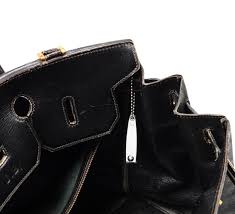
In 1984, the first Hermes Birkin bag was handcrafted specifically for Jane Birkin herself. The bag was a fusion of practical elegance.Made with the signature Hermes craftsmanship it had:


  • Boxy structure and reinforced base, allowing it to stand upright
  • Top flap and turn-lock closure, secured with a padlock and key
  • Two rolled leather handles for hand carrying
  • Hermès signature saddle stitching, completed entirely by hand
  • High-quality leathers, such as Togo, Clemence, or Epsom

What made the Birkin stand out was not only its look, but the care and time it took to create each piece. Though the bag was initially designed for Jane Birkin, it quickly caught the attention of fashion lovers, socialites, and celebrities. The blend of luxury and utility was rare — this wasn’t a dainty handbag; it was a power piece.

By the 1990s, the Birkin bag became synonymous with wealth, exclusivity, and refined taste. With waitlists that reportedly stretched to years, owning a Birkin became both a style statement and a mark of elite status.

Today, the Hermès Birkin is a cultural and financial powerhouse. It’s been featured in films, referenced in songs, and flaunted in paparazzi shots. But it’s also revered by true fashion lovers for its artistry. The Birkin is set apart from the rest as they take pride in their exclusivity, customization, investment value and the celebrity culture, from Victoria Beckham, to Kim Kardashian, Lady Gaga and Cardi B, who have showcased the Birkin as the ultimate fashion flex.

Today, the Hermès Birkin is a cultural and financial powerhouse. It’s been featured in films, referenced in songs, and flaunted in paparazzi shots. But it’s also revered by true fashion lovers for its artistry. The Birkin is set apart from the rest as they take pride in their exclusivity, customization, investment value and the celebrity culture, from Victoria Beckham, to Kim Kardashian, Lady Gaga and Cardi B, who have showcased the Birkin as the ultimate fashion flex.


Each Birkin is unique, thanks to variations in leather grains, patinas, and craftsmanship. Some of the most famous and rare Birkins include:


  • Himalaya Birkin: Made from Niloticus crocodile and dyed to resemble the snow-capped Himalayas — one of the rarest and most expensive Birkins ever sold.
  • So Black Birkin: A black-on-black version with black hardware — mysterious and chic.
  • Mini Birkins: Petite versions that are perfect for evening wear yet still command enormous resale value.


Although the bag bears her name, Jane Birkin herself had mixed feelings about it. She was never one to chase luxury or glamour, and often poked fun at the bag’s reputation.


She once auctioned her personal Birkin for over £100,000 to raise money for relief efforts in Haiti. In 2015, she made headlines by requesting her name be removed from the crocodile-skin versions of the Birkin after learning about the conditions of exotic animal farms. Hermès later assured her that it was committed to ethical sourcing, and the issue was resolved.


Despite these controversies, Jane’s name remains forever tied to one of fashion’s most iconic creations.


The winning bidder? Shinsuke Sakimoto (the CEO of Valuence – a Japanese luxury resale trailblazer with an appetite for history making moves). For Sakimoto the win was not for nostalgia but a statement that the past can be just as seductive as the future. In the 10 charged minutes which sparked a bidding war amongst 9 bidders, the coveted leather handbag transformed into the most expensive ever sold. 

This smooth tan leather handbag, engraved with Jane Birkin’s initials and with a humble nail clipper dangling from the strap, reminds everyone that style doesn’t care for convention. Though well-worn, scratched, and scuffed in places — the way only a heavily used everyday bag can be — it emerged into the spotlight.

The first Birkin was never part of a grand marketing strategy or product launch. It was born from a simple conversation between two people — a creative mind and a woman in search of something different. More than 40 years later, the original Birkin bag has become a piece of history, a symbol of craftsmanship, and proof that practicality and luxury can come together in the most unexpected way.

This article references details from Sotheby’s auction records and statements by Shinsuke Sakimoto, founder of Valuence Japan.

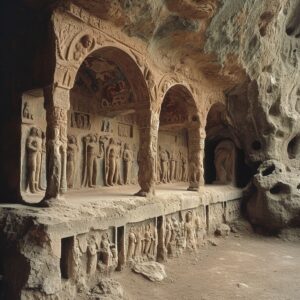
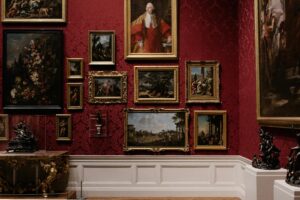
Art itself is a wide spectrum. It surrounds a multifaceted concept that encompasses various forms of human expression and creativity. Its meaning can be interpreted in numerous ways, depending on cultural, social, personal, and philosophical contexts.Art allows individuals to express emotions, thoughts, and feelings that might be difficult to convey through words alone.Through visual, auditory, and performative means, art can tell stories, share experiences, and document historical events. Religious aspects can also be found in art where visual representation of religious ideologies and their relationship with humans are depicted.


The history of art spans over thousands of years and encompasses a vast array of cultures, styles and movements. Art focuses on objects made by humans from different cultures across the globe throughout history with a primary emphasis on its aesthetic value. Visual arts can be divided into 2, fine arts and applied arts. History of arts itself is often depicted as a chronology of masterpieces created during each civilization. 


Prehistoric art includes a broad range of art including some human artefacts. Amongst the first art and containers were discovered from the Middle Stone Age in South Africa dating more than 100,000 years ago. One of the more renowned form of art in the form of prehistoric statuettes known as Venus figurines (exaggerated breasts and bellies, small heads, wide hips, and legs that taper to a point) the most famous ones being Venus of Hohle Fels (Germany) and Venus of Willendorf (Austria).

The best known prehistoric artworks are the cave paintings depicting animals. There are several hundreds of these, namely Lascaux and Dordogne; France; Ukraine; Italy; Spain; and Great Britain. Many theories surround the purpose of these art namely religious and to evoke hunting success. Neolithic art was characterised by a more settled community thus showing emergence of pottery, weaving and even some megalithic structures like the Stonehenge.


Ancient Egyptian art is known for its monumental structures like the pyramids which contain detailed hieroglyphics and statutes of pharaohs. The ancient Egyptian artworks served as an essential functional purpose bound with religion and ideology. The more renowned statue would be the Mask of Tutankhamun (1327 BCE) which was a gold funerary mask of the 18th Dynasty pharaoh Tutankhamun. It was excavated by Howard Carter in 1925 after over 3000 years now being displayed in the Egyptian Museum (Cairo). Another notable Egyptian art in the form of a structure is the largest Egyptian pyramid known as the Great Pyramid of Giza which served as the tomb of Egyptian pharaoh Khufu who ruled during the 4th dynasty. Built in 2600 BCE over a 27 year period, this pyramid is the oldest of the 7 wonders of the world and the only wonder that has remained largely intact.

Roughly around the same timeline saw the emergence of mesopotamian art like ziggurats, relief sculptures and cuneiform inscriptions. The ziggurat was built in the ancient times as part of a temple complex that included other buildings. The word ziggurat comes from the Assyrian word ‘zaqarum’ (meaning height, pinnacle, to be high up). For example the Ziggurat of UR is a neo-sumerian ziggurat built by KIng Ur-Nammu dedicated in honour of the Mesopotamian moon God in approximately 21st century BCE. Cuneiform is a logo-syllabic writing system that was used to write actively from the early bronze age until the beginning of the common era. Through the course of history, cuneiform has been adopted to write a number of languages. Another civilization that developed here was the Akkadian Empire which is the world’s first great empire.

Assyria then dominated with cities filled with detailed stone reliefs depicting scenes of court life, religious practices, hunting and epic battles. This was followed by the Babylonians where visitors were greeted with the impressive Ishtar Gate, its walls covered in vivid blue glazed bricks and reliefs depicting dragons, bulls and lions, named after Ishtar the Goddess of War and Love.


The Achaemenid Empire ruled by King Cyrus II came next. Persepolis (now Iran) depicted art celebrating its wealth and power, full of impressive sculptures of religious images and the ruins of a palace.


Roman art is a very broad topic, spanning almost 1,000 years and three continents, from Europe and Africa and Asia. The first Roman art can be dated back to 509 B.C.E., with the legendary founding of the Roman Republic, and lasted until 330 C.E.

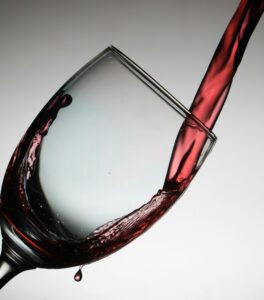
The English word ‘wine’ comes from an early borrowing of the Latin word vinum. The history of wine spans thousands of years and is closely intertwined with human civilization and culture. The earliest known traces of wine are from Georgia (6000 BCE), Iran [now known as Persia] (5000 BCE), Armenia (4100 BCE) and Sicily (4000 BCE). Wine reached the Mediterranean Basin in the early Bronze Age and was consumed throughout history for its intoxicating effects mainly for celebrations by ancient civilizations like Greece and Rome. The earliest known evidence of wine production dates back to a region now known as Georgia around 6000 BCE where both archaeological & genetic findings included ancient pottery with residual traces of grape wine. 

The altered consciousness of wine has been considered religious since its origin. The ancient Greeks worshipped Dionysus (the God of wine-making, orchards and fruit, vegetation, fertility, festivity, insanity, and theatre). His discovery of viticulture at Mount Nysa was rewarded as the God of Wine also known as Bachus. This cult was carried on by the ancient Romans. The consumption of ritual wine (probably sweet wine originally) was part of a Jewish practice since Biblical times, also commemorating Jesus’ Last Supper (incorporated in it) wine became even more essential to the Christian Church. The Biblical book of Genesis first mentions the production of wine by Noah following the Great Flood (between 5th and 3rd Century BCE).


Albeit Islam nominally forbade the production or consumption of wine, Geber (Jabir Ibn Hayyan – an Islamic alchemist) pioneered wine’s distillation for medicinal and industrial (in the form of perfume) purposes. Wine production and consumption increased beginning 15th century CE as part of the European expansion. This is despite the grape phylloxera (an insect pest of grapevines worldwide) in 1887. 

The earliest known winery from 4100 BCE is the “Areni-1” cave in Vayots Dzor, Armenia. The earliest evidence of fermented alcoholic beverages of rice, honey & fruit which is sometimes compared to wine was claimed in China around 7000 BCE. This winery site contained a wine press, fermentation vats, jars, and cups. Archaeologists also found vitis vinifera seeds and vines. This grape is still used to make wine.

There are various types of wine:-

  • Red Wine – made from blue grapes with its skin
  • White Wine – made from green grapes or destemmed blue grapes without skin
  • Rose Wine – blue grapes incorporating some of the colour from the grape skins but not enough to qualify as Red Wine.
  • Orange Wine – green grapes with skin.
  • Sparkling Wine – made from both green and blue grapes
  • Champagne – a form of Sparkling Wine that originated in France
  • Fortified Wine – wine with a higher alcohol content
  • Ice Wine – wine with low alcohol content and a sweet taste
  • Dessert Wine – wine served with dessert 

Though these categories are similar, they are indeed different. In General the type of grape and the amount of skin contact determines the colour and style of the wine. Wines however are not limited to grapes alone but other fruits as well, for example, apple (apple wine), honey (honey wine), starch (barley wine/ rice wine). These are generically called fruit wine or vin de pays (a French term). Most fruits naturally lack either sufficient fermentable sugars, proper amount of acidity, sufficient yeast to promote or maintain fermentation, or a combination, this is in comparison with the suitability of grapes. 

In the United States of America, for a wine to be vintage-dated, and labelled with a country of origin or American Viticulture Area (AVA), 95% of its volume must be from grapes harvested that year. If it is not labelled with a country of origin or AVA, the percentage is reduced to 85%. These wines are generally bottled in a singular batch resulting in each bottle producing a similar taste.


Significant changes on the character of a wine from the same vineyard could be due to climate. Thus vintage wines are produced to be individually characteristic of the particular vintage and serve as the flagship wines of the producer. Superior vintages from reputable producers and regions will often command much higher prices than their average ones. Non-vintage wines can be blended from more than one vintage to help wine-makers sustain a reliable market image and maintain sales revenue.


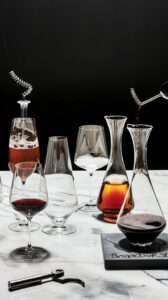
Wine tasting is the sensory examination and evaluation of wine. The sweetness is determined by the amount of residual sugar in the wine after fermentation relative to the acidity present in the  wine. Dry wine has a small amount of residual sugar. Some wine labels suggest opening the bottle and letting the wine ‘breathe’ for a few hours before serving, this method is known as decanting (where the wine is poured into a special container just for breathing). Decanting with a filter allows the removal of bitter sediments (more common in  older wine) that may have been formed in the wine. During aeration, (more suitable for younger wine) the exposure to air often ‘relaxes’ the drink; making it smoother and better integrated in aroma, texture and flavour. Aeration is not recommended for older wine as it tends to fade (loss of character and flavour intensity).

Experienced tasters can distinguish flavour characteristics of a specific grape and flavours that result from other factors (including some intentional elements like chocolate, vanilla or coffee). Other points to note are the vertical and horizontal tasting, where in the latter, the wines are from the same vintage but different wineries. Wine aroma comes from volatile compounds released in the air, vaporisation of these compounds can be accelerated by twirling the glass or serving the wine at room temperature. Many drinkers however prefer to chill red wines like Chinon and Beauolais. In discussing the temperature of wines, different types are recommended at different temperature, for example, White Wine -13℃ / 55℉, Red Wines however are perceived best served chambre (room temperature) like Pinot Noir at 16℃ / 61℉ or at 18℃ / 64℉, Cabaret Sauvignon, Zinfandel and Rhone at 18℃ / 64℉ or 21℃ / 70℉.


Outstanding vintages from the best vineyards may sell for thousands per bottle. Fine wine covers USD 30 to USD 50 and investment wines are considered as Veblen goods (valuable). The most notable was a ‘Chateau d’Yquem’, a 135 year old vertical, containing every vintage from 1860 to 2003 which was sold for USD 1.5 million. The most common wines purchased for investments include Bordeaux and Burgundy (cult wines), scored highly by Robert Parker who is a retired American wine critic, from Europe and elsewhere, Port wine (wine produced in Douro Valley of North Portugal – a sweet red wine).


Characteristics of highly collectible wines include a proven track record of holding well over time, a long drinking-window plateau (period for maturity and approachability), consensus among experts on quality of the wine, and a vigorous production method at every stage including grape selection and barrel ageing.

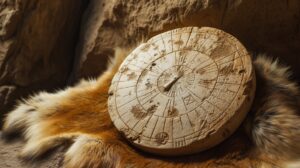
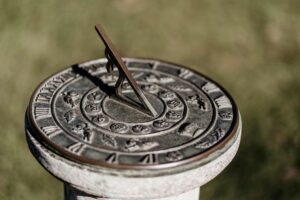
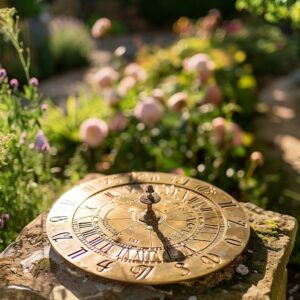
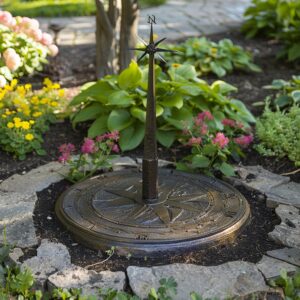
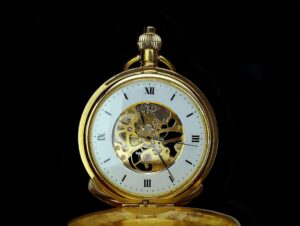
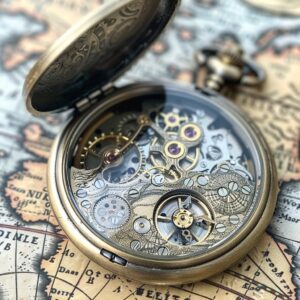
Before I waddle into the history of watches, I think it would be more appropriate to start of on How people use to tell the time? It began around 3500 BCE in Egypt and Mesopotamia where a tall vertical or diagonal-standing object called a gnomon was placed and using shadows from the sun led to the famous sundials. This form of time telling was relatively accurate but not much of use without the sun (not only at night but also during rainy/cloudy days). Man then moved into the use of water to tell time to resolve the problem of when there is no sun. This was known as clepsydra where time was determined by the even and gradual flow of water from a marked container to an empty container allowing the person to tell how much time has lapsed.

Archaeological evidence strongly suggests that the Babylonians and the Egyptians began measuring time at least 5000 years ago thus introducing calendars that were primarily used to regulate planting and harvesting of crops, determining shipment of goods, and even to organize some communal activities & public events. The Babylonian, Egyptians, Chinese and Mayan, each with their sophisticated astronomical observation & calendrical systems prove to be the most renowned father or time. There are through history a number of other methods of telling time including the moondial, merkhet (star clock), candle clock, lantern clock, hourglass, and the congreve clock (patented in 1808 by Sir William Congreve).

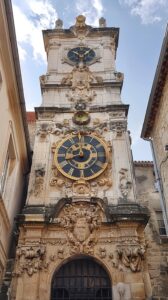
Figuring out the time these days is easy whether we are looking at clocks or wristwatches or even through our phones and other devices. By the 13th Century the European Monasteries had mechanical clocks installed, driven by weights, these large pieces were installed in church towers and public buildings. 

The invention of the watch itself began in the 15th century and cannot be attributed to any single individual as it was a result of multiple inventors over time. This was of course after the invention of the clock mechanism in the late 13th and early 14th century. The more notable inventors of clocks were Richard of Wallingford (1292-1336), an English monk and abbot of St. Albans, who designed and constructed an advanced astronomical clock. He was succeeded by Giovanni de Dandi (1318-1389), an Italian physician and clockmaker who built the Astrarium.


Peter Henlein (1479/1480-1542), a German locksmith and clockmaker was credited with the creation of some of the first timepieces known as Nuremberg Eggs. These timepieces were small, spring-driven and portable. During the late medieval period, this development laid the groundwork for the invention of what we now term watches. The Renaissance period saw significant advancements in science, technology and craftsmanship which benefited the development of more accurate and reliable watches.

John Harrison (1693-1776), an English carpenter and clockmaker became prominent for his work on marine chronometers which thus allowed sailors to determine longitude whilst at sea. This became crucial for accurate navigation and his advancement on precision timekeeping indirectly influenced the development of more accurate watches.

In 1927, the invention of quartz crystal oscillators brought even greater precision to timekeeping. These Quartz Clocks became widespread due to their reliability and affordability, not to mention their ability to be movable with ease. In 1949, the first atomic clock was built using the vibrations of atoms (usually cesium or rubidium) to keep time. These  are incredibly accurate to modern versions, losing only about one second in millions of years; this was essential for GPS and various scientific applications. Finally Optical clocks (21st century), which use lasers to measure the vibration of atoms or ions at optical frequencies offer an even higher precision than atomic clocks and are at the forefront of current timekeeping research.

Although Peter Heinlein is often credited with the invention of the portable timepiece, it is important to recognise that the evolution of timekeeping devices was a gradual process involving many inventors and innovations over the centuries, beginning with ancient methods of timekeeping to 21st century optical clocks, increasing accuracy tremendously.

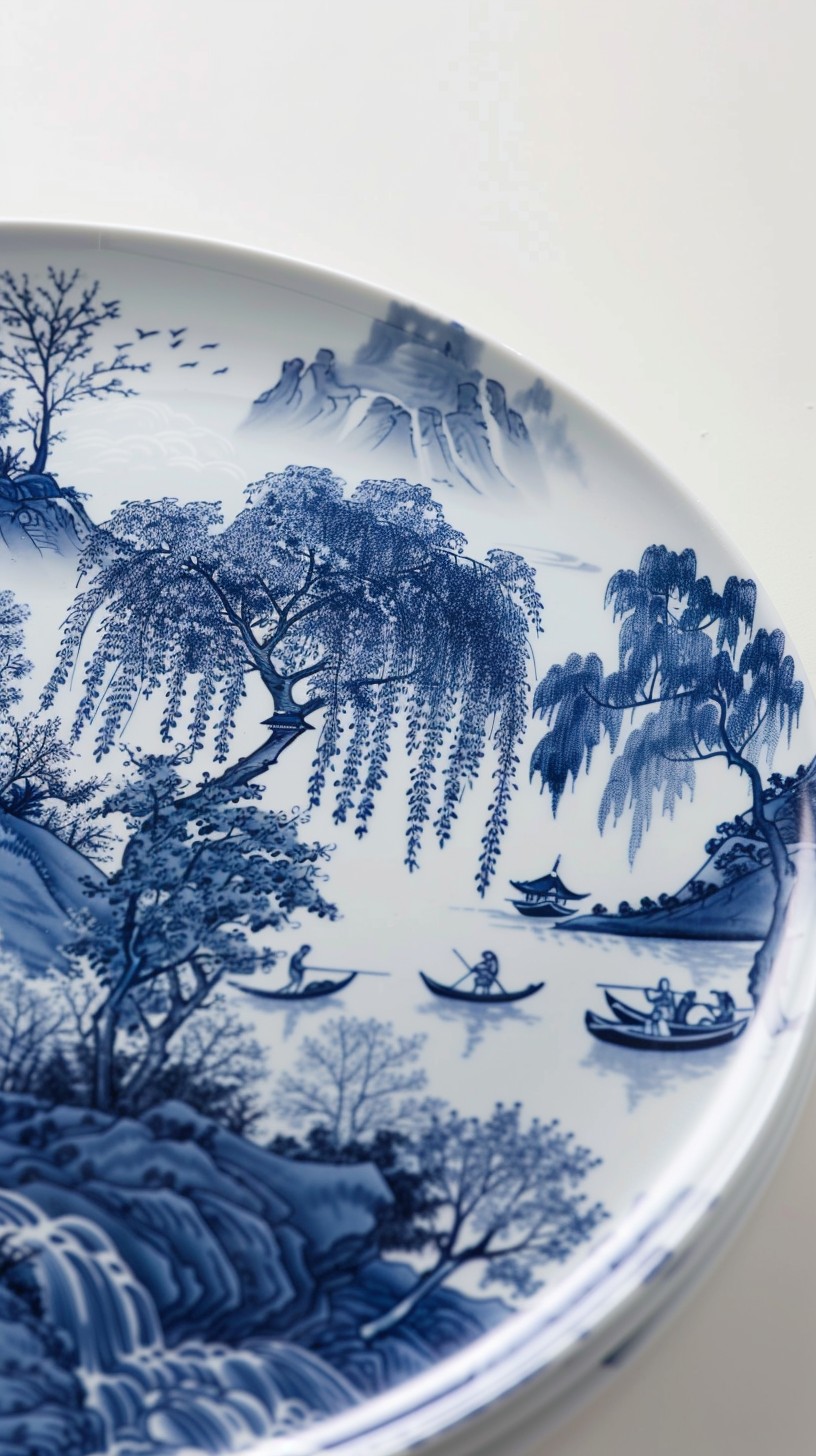
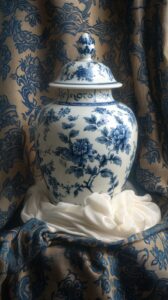
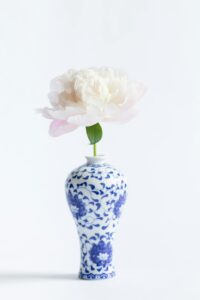
Porcelain dates back to roughly the 8th century where the whiteness and translucency had been achieved. Referred to as “china” rich history that spans over 1000 years. Renowned for its beauty, craftsmanship, and significant influence on global ceramics. Its whiteness and translucency that we see today was achieved around the 8th century. These “china” were exported across the globe making them highly prized.


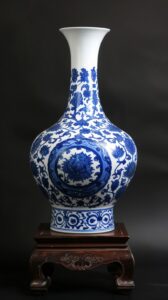
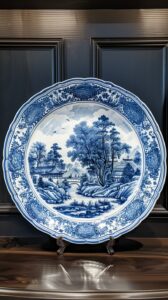
Beginning with the word ‘ci’ meaning either porcelain or stoneware, it is the skillful transformation of ordinary clay into beautiful objects that captivated the many. 3 pivotal achievements in the Ming and Qing Dynasty were the blue and white porcelain, celadon glazed, and falangcai. Chinese ceramics by far are the most advanced in the world made especially for the imperial court, export, and even for the domestic market.


Ceramics are fired in oxidising (increasing the amount of oxygen) or reduction (reducing the amount of oxygen) during the process. Oxidising is famous in the Northern part of China creating glazes with warm, ivory covered glazes of porcelains whereas reduction is a process used in the Southern part of China creating a more cool, bluish tinge of porcelain.

Early forms of these items began with the proto-porcelain during the Shang & Zhou Dynasties (1600-256 BCE), these pieces were typically grey and unglazed but nevertheless set the foundation for later advancements. The Han Dynasty (206 BCE-220 CE) saw the development of glazed ceramics and introduced green-glazed wares known as ‘Yue ware’ which eventually became popular and even laid the groundwork for future porcelain development. The Tang Dynasty (618-907 CE) was well known for its ‘sancai’ (3 coloured) glazed ceramics used primarily in funerals. This was nevertheless an important mark to the productions of true porcelain (white and translucent) especially in the Northern region. The golden age of Chinese ceramics were considered in the Song Dynasty (960-1279 CE) where famous kilns (furnace houses) like the Ding, Ru, Jun, and Ge produced exquisite porcelain known for their simplicity, elegance and technical perfection. Also notably the celadon wares from the Longquan kilns that became highly prized.

The more famous blue and white porcelain rose to fame in the Yuan Dynasty (1271-1368 CE), using cobalt blue underglaze on white porcelain bodies. This made the Jingdezhen kiln the centre of porcelain production and export across Asia and the Middle East. This refers to high-fired (1300’) white ceramics whose bodies are translucent in appearance and makes a high ringing sound when struck this is in contrast from stoneware which is tougher, non-translucent material fired at a lower temperature (between 1100’ to 1250’). Northern porcelain like that from the Ding kiln were made predominantly of clay rich in Kaolin (a fine soft white clay, resulting from the natural decomposition of other clays or feldspar) this is in contrast with Southern China where porcelain stone was the main material used in making porcelain. It is important to note that the imperial kilns, Jingdezhen, Jiangxi province, Southern China, kaolin was added to the porcelain stone as compared to the Fujian province where the porcelain stone alone was used, resulting in a more dense and compact “china” from the North (Fujian) and a more glassy, sugary version from the South.

Porcelain production reached new heights during the Ming Dynasty (1368-1644 CE). Again the Jingdezhen kilns produced highly refined blue and white porcelain as well as polychrome enamelled wares. This was also the time that the ‘doucai’ (contrasting colours) and ‘wucai’ (five coloured) wares were introduced. Characterised with a range of colours, the Qing Dynasty (1644-1912 CE) continued the tradition of high-quality porcelain. Their range included famille verte (green family), famille rose (pink), and famille noire (black) which became popular. Another notable achievement of this time was the development of the translucent blue glaze called ‘claire-de-lune’.

Chinese porcelain had a profound impact on global ceramics, even influencing styles and techniques in Europe and the Middle East, this was especially noticed during the Ming and Qing Dynasties, where Chinese porcelain was introduced to the western world making it highly coveted. Today Jingdezhen remains a significant centre for porcelain production continuing a millennium long tradition that has long been associated with wealth and  high social status within China and internationally. Their intricate designs and superior craftsmanship have influenced ceramics leading to adaptations globally. Innovations in glazing, kiln technology, and decorative techniques have significantly contributed to the advancement of ceramic arts. Modern Chinese artists and craftsmen blend traditional techniques with contemporary designs ensuring that Chinese porcelain not only remains as a statement to the skill and artistry of Chinese potters but also continues to evolve and inspire.

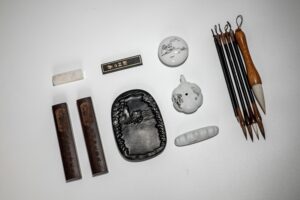
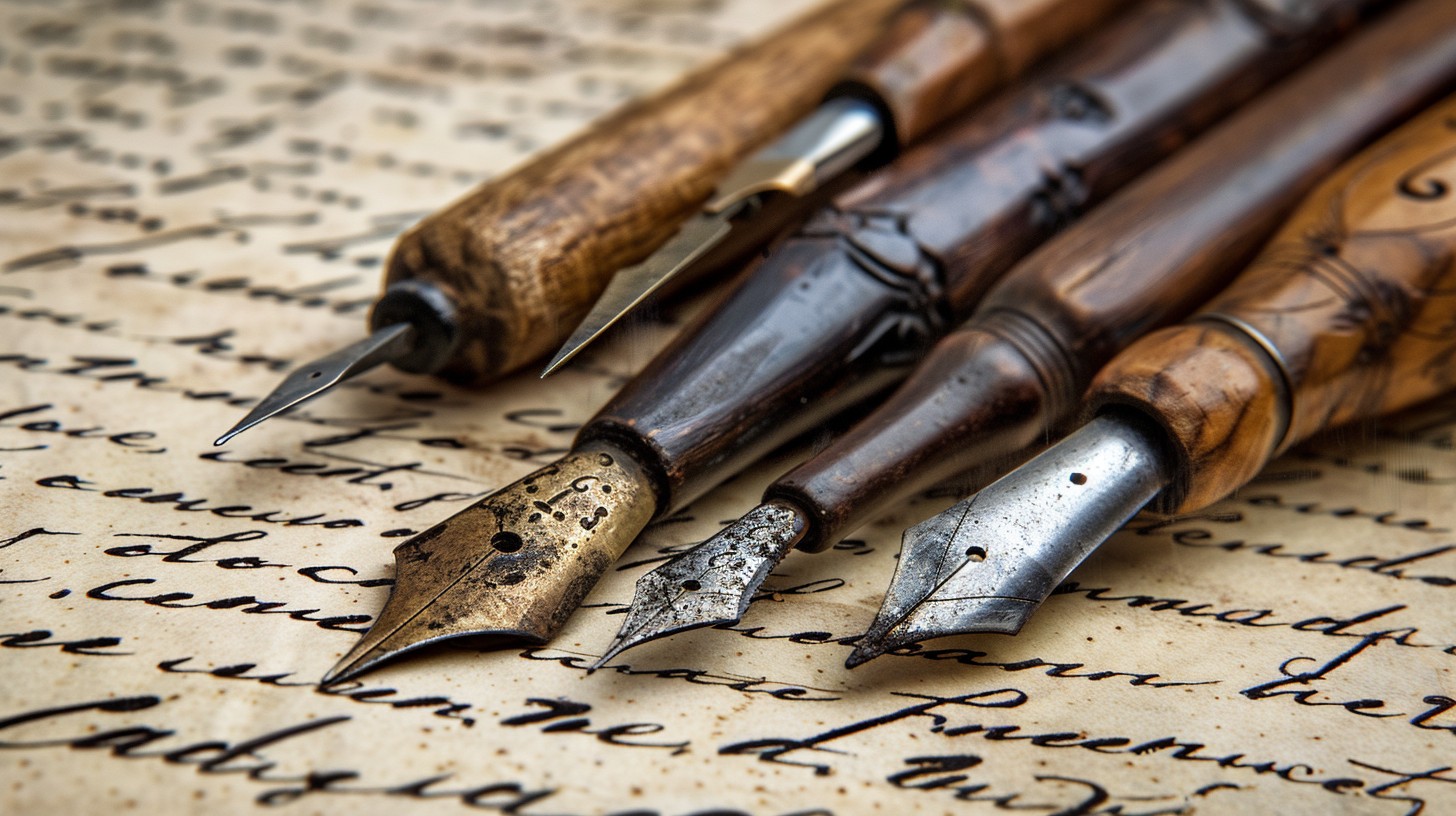
History of pens is a fascinating journey that traces the evolution of writing instruments from ancient times. The beginning of writing itself was not in the form of words but more of scratches to the surface of moist clay using a bronze tool or a bone tool. From there the earliest form of documentation would be the more known depiction of what happened via pictures by the Egyptians (3000 BCE). Simultaneously for writing on papyrus scrolls, scribes used thin reed (a tall slender-leaved plant that grows in water or in marshy grounds) brushes or reed pens. In 1300 BCE, the Romans began developing a form of writing that they scribed into thin sheets of wax (on wooden tablets) using a metal stylus. When the writing was no longer needed the scribe would rub it off with the flat end of the stylus. This similar method was adopted in Asia but instead of a metal stylus they used a bronze stylus.

The anglo-saxons used tablets filled with wax for notes and for planning the layout of large books with text alongside parchment. They wrote on the tablets with a metal or bone stylus that had a pointed end and rubbed out the words with the flat end. In medieval Europe (600-1800 CE), popularity rose on quill pens, made from the feathers of large birds like geese, found that writing on a quill pen altered their style of writing. The hollow shaft of the feather held the ink and the tip was cut as a nib. These quill pens first appeared in Seville, Spain beginning with capital letters and moving on to small letters and numbers. In the 1790s the pencil lead was then invented independently in France and Australia. This form of a writing instrument was relatively better than a quill in the sense that there was no risk of ink spills and splashes but like the regular pencil it did not promote a sense of confirmation in terms of much needed and important documents.

In 1822, an inventor John Mitchell, invented and began mass production of metal nibs (patented in 1803). These metal nibs, made from hard alloys of Iridium, Rhodium, and Osmium, replaced the quill pen by the 19th century. This was attributed to the durability of these nibs as compared to quills. Not long after, in1844, Lewis Waterman, an insurance broker, invented the first ever fountain pen which had an internal ink reservoir that fed ink to the nib through capilari action and with some help from good old gravity.

The more modern version of the ball point pen was invented in 1940 by Josef (Lazlo) and Georg Biro. In summer of 1943, the first commercial models were made, however the patent of Lazlo’s creation was bought over by the British Government. The design of the ball point pen was more rugged which was why sales sky rocketed during WWII as the military needed robust writing material to survive the battlefield environment. This invention was introduced to the US market in 1945 and was sold as the “the first pen to write underwater”. At the Gimbel’s department store in New York on 29th October 1945, some 10,000 units were sold at the launch.

In 1953, a French Baron, Bich (BIC, Co.) developed the industrial process of manufacturing ball point pens, lowering the cost dramatically, making the first inexpensive ball point pens. Tokyo Stationery Company, Japan (1960) invented the first felt tip pen and Papermate’s Flair was among the first to hit the US market and has led since. This set a stepping stone for highlighters. Early 1980s saw the birth of roller ball pens, unlike the thick ink used in the conventional ball point, roller ball pens employ a roller ball and liquid ink, producing a smoother line. In the 1990s onwards companies turned to using rubber to decrease the grip. A much newer patent is that of the ring pen, designed to write without gripping the pens with 3 fingers.

Thus is the evolution of man from scratching on the surface of moist clay to writing without gripping the pen.


The word auction itself is derived from auctus which is the past principle of the Latin word (meaning ‘I increase’). Auctions date back to ancient times and began to take shape in the late Middle Ages and Renaissance period in Europe. In the ancient times, auctions revolved around goods, services, slaves, etc across different cultures. The first mention of auction according to the Oxford English Dictionary is in 1595. England, 17th & 18th Century, auctions by candles were held where the auction ended with the extinguishing of the candle flame so that no one would know exactly when the auction would end and make any last second bids. In 1641 the House of Lords recorded another type of auction in lieu of auction by candles known as footrace. This was again recorded in the year 1660 in the diary of Samuel Pepys where on 2 occasions the admiral sold surplus ships “by an inch of candle”. His diary also recorded a hint from a highly successful bidder who cleverly observed that just before a candle expires, the candle-wick flares up slightly where he would subsequently shout his final bid winning the auction. The first known auction house in the world was the Stockholm Auction House (Stockholms Auktionsverk), Sweden founded by Baron Claes Ralamb in 1674.


By the end of the 18th Century, auctions of artworks were commonly held in taverns and coffeehouses. These would resemble the more modern auctions we have as the auctions we held daily, auction catalogs printed to announce available items, and in some cases, these catalogs were by themselves elaborate works of art, containing considerable detail on items on auction. The Great Slave Auction in 1859 was recorded as the world’s largest single sale of enslaved persons in the US with 436 men, women, and children being sold. Another fact to note would be that some auctioneers in the US are known as ‘Colonel’ till today since goods seized by armies during the American Civil War were sold by the Colonel of the division. Southern American Tobacco auctions in the late 19th Century, had a mixed auction style, Traditional 17th Century England combined with chants of slaves from Africa.


Some of the more notable ancient auctions that is recorded are for example:-

Ancient Mesopotamia & Babylon [as early as 500 BCE] – Babylonian Marriage Market 1875 depicted by Edwin Long, where annual auctions held were women for marriage. Auctions began with women that we’re regarded as most beautiful by the auctioneer (forward auction) progressing to less attractive maidens (reverse auction) to determine the price to be paid to a swain (young peasant suitor) contrary to the forward auction where the price of the maiden is paid by the swain.

Ancient Rome [between 1st century to 4th century BCE] – auctions known as auctiones were held after a military victory, where Roman soldiers would drive a spear (symbolising a public auction and authority of the state) into the ground, around the spoils of war, to be auctioned off. The auctioneer was called a ‘praeco’. These auctions included soldiers and captives as ‘spoils of war’ alongside all other military equipment/spoils, and property, proceeds of the auction went towards their war effort. The most famous auction was the sale of the Roman Empire, on 28th March 193 a Praetorian Guard who killed emperor Pertinax which subsequently led to the sale of the throne to Didius Julianus, the highest bidder at 6250 drachmas per guard, initiating a brief civil war. Didius was beheaded 2 months later leaving the empire to Septimius Severus. The Romans also used auctions to liquidate assets of debtors whose property had been confiscated, for example Marcus Aurelius who sold household furniture to pay off his debts.

Ancient Greece [5th Century BCE] – sales of property, slaves and goods were held in an auction known as an ascending bid where the highest bidder wins the woman (similar to the modern day auction)

Ancient China [618 to 907 BCE] – it has been recorded that the personal belongings of deceased Buddhist Monks were sold at auctions as early as the 7th century. Namely the Tang Dynasty where auctions were used to sell goods, property, and Chinese calligraphy artworks.This resulted in the Chinese developing sophisticated auction techniques and auction houses. Auctions thus became an integral part of the Chinese economy and evolved over the centuries.

Ancient India [Various periods] – Ancient Indian texts have recorded the sale of goods and property through an auction-like method. Public auctions were conducted for land, livestock and other items of value. Auctions were depicted as a way to ensure transparency and fair pricing in the sale of goods.

The Key characteristics of auctions during the ancient times are:-

Public – Auctions were held in public spaces ensuring transparency and attracting multiple bidders.

Variety – A large variety of auctions including slaves, land, households, artwork, women (for marriage), military spoils, and even everyday goods.

Auctioneers – Special individuals or officials e.g. the preaco in Rome appointed to host the auction.

Bidding – Similar to some modern auctions where bidders place bids by verbal or a show of hands.

Cultural – Auctions were not just economic transactions but also portrayed social and political implications such as the Roman practice of auctioning war spoils.

Benefits of Auctions (in contrast with barter trade system) :-

Facilitating transparent and competitive price discovery – highest bidder determines the price thus reflecting the current market value of the item.

Immediate liquidity – sellers can convert their items to cash.

Standardized rules and procedures – making transactions straight forward and predictable.

Wide participation – increasing the chance of success.

Efficient in terms of time and effort – bidding process is straightforward and the item sold to the highest bidder without prolonged negotiation.

Flexibility – exchange of goods and services may not always be feasible, nor convenient.

Fair and transparent – open bidding processes ensure fairness and transparency.

Specialization and division of labor – barter limits specialization because individuals must produce what they need or find suitable candidates who possess what they need and are willing to accept what they have in exchange.

Scalability – Limited in barter exchange as it is reliant on finding matching needs of two individuals.


In conclusion, auctions in ancient times proved to be an integral part of the economies and societies of many cultures. They facilitated the sale and distribution of a wide range of goods and services, from slavery to property, to marriage contracts and military spoils. The basic principles of auctions – competitive bidding, transparency, and public participation – have remained consistent through the centuries, evolving into the complex, diverse auction systems we see today. Also in contrast with the much renowned barter trade system of ancient times, the auction proves to have significant benefits. These benefits made auctions a more practical and efficient method in ancient times. It also set the standard on valuation of historical, cultural, and valuable items.