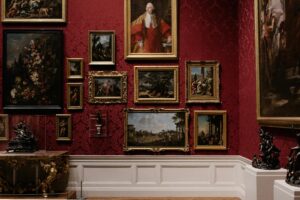

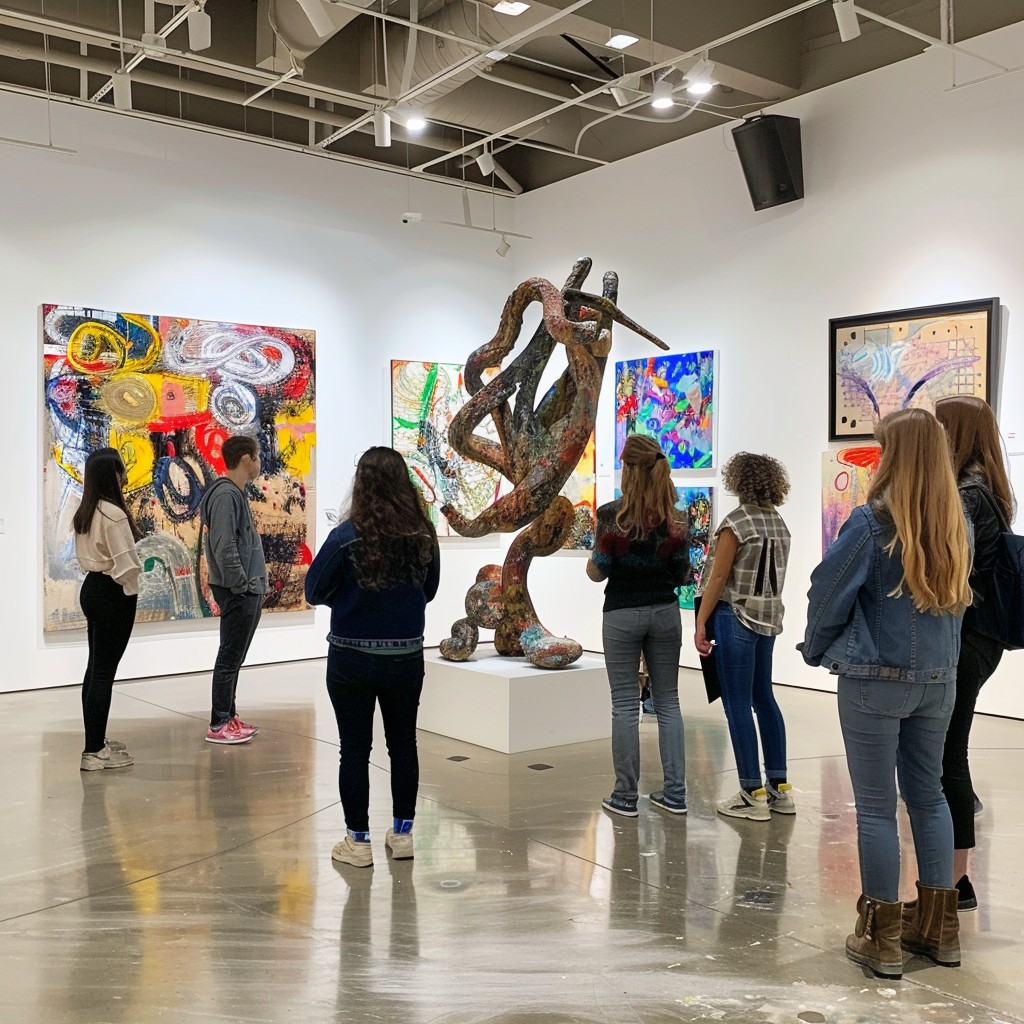

Art itself is a wide spectrum. It surrounds a multifaceted concept that encompasses various forms of human expression and creativity. Its meaning can be interpreted in numerous ways, depending on cultural, social, personal, and philosophical contexts.Art allows individuals to express emotions, thoughts, and feelings that might be difficult to convey through words alone.Through visual, auditory, and performative means, art can tell stories, share experiences, and document historical events. Religious aspects can also be found in art where visual representation of religious ideologies and their relationship with humans are depicted.
The history of art spans over thousands of years and encompasses a vast array of cultures, styles and movements. Art focuses on objects made by humans from different cultures across the globe throughout history with a primary emphasis on its aesthetic value. Visual arts can be divided into 2, fine arts and applied arts. History of arts itself is often depicted as a chronology of masterpieces created during each civilization.
Prehistoric art includes a broad range of art including some human artefacts. Amongst the first art and containers were discovered from the Middle Stone Age in South Africa dating more than 100,000 years ago. One of the more renowned form of art in the form of prehistoric statuettes known as Venus figurines (exaggerated breasts and bellies, small heads, wide hips, and legs that taper to a point) the most famous ones being Venus of Hohle Fels (Germany) and Venus of Willendorf (Austria).


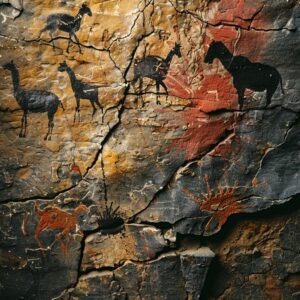
The best known prehistoric artworks are the cave paintings depicting animals. There are several hundreds of these, namely Lascaux and Dordogne; France; Ukraine; Italy; Spain; and Great Britain. Many theories surround the purpose of these art namely religious and to evoke hunting success. Neolithic art was characterised by a more settled community thus showing emergence of pottery, weaving and even some megalithic structures like the Stonehenge.
Ancient Egyptian art is known for its monumental structures like the pyramids which contain detailed hieroglyphics and statutes of pharaohs. The ancient Egyptian artworks served as an essential functional purpose bound with religion and ideology. The more renowned statue would be the Mask of Tutankhamun (1327 BCE) which was a gold funerary mask of the 18th Dynasty pharaoh Tutankhamun. It was excavated by Howard Carter in 1925 after over 3000 years now being displayed in the Egyptian Museum (Cairo). Another notable Egyptian art in the form of a structure is the largest Egyptian pyramid known as the Great Pyramid of Giza which served as the tomb of Egyptian pharaoh Khufu who ruled during the 4th dynasty. Built in 2600 BCE over a 27 year period, this pyramid is the oldest of the 7 wonders of the world and the only wonder that has remained largely intact.
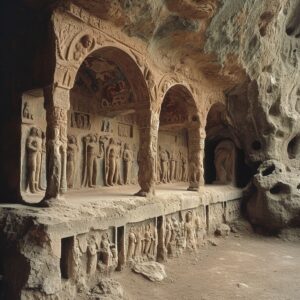
Roughly around the same timeline saw the emergence of mesopotamian art like ziggurats, relief sculptures and cuneiform inscriptions. The ziggurat was built in the ancient times as part of a temple complex that included other buildings. The word ziggurat comes from the Assyrian word ‘zaqarum’ (meaning height, pinnacle, to be high up). For example the Ziggurat of UR is a neo-sumerian ziggurat built by KIng Ur-Nammu dedicated in honour of the Mesopotamian moon God in approximately 21st century BCE. Cuneiform is a logo-syllabic writing system that was used to write actively from the early bronze age until the beginning of the common era. Through the course of history, cuneiform has been adopted to write a number of languages. Another civilization that developed here was the Akkadian Empire which is the world’s first great empire.
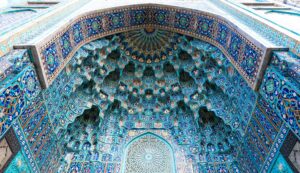
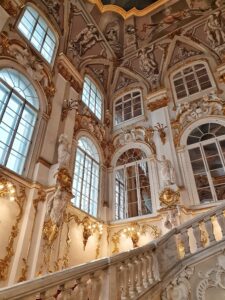
Assyria then dominated with cities filled with detailed stone reliefs depicting scenes of court life, religious practices, hunting and epic battles. This was followed by the Babylonians where visitors were greeted with the impressive Ishtar Gate, its walls covered in vivid blue glazed bricks and reliefs depicting dragons, bulls and lions, named after Ishtar the Goddess of War and Love.
The Achaemenid Empire ruled by King Cyrus II came next. Persepolis (now Iran) depicted art celebrating its wealth and power, full of impressive sculptures of religious images and the ruins of a palace.
Roman art is a very broad topic, spanning almost 1,000 years and three continents, from Europe and Africa and Asia. The first Roman art can be dated back to 509 B.C.E., with the legendary founding of the Roman Republic, and lasted until 330 C.E.