
Passions Auctions

Before I waddle into the history of watches, I think it would be more appropriate to start of on How people use to tell the time? It began around 3500 BCE in Egypt and Mesopotamia where a tall vertical or diagonal-standing object called a gnomon was placed and using shadows from the sun led to the famous sundials. This form of time telling was relatively accurate but not much of use without the sun (not only at night but also during rainy/cloudy days). Man then moved into the use of water to tell time to resolve the problem of when there is no sun. This was known as clepsydra where time was determined by the even and gradual flow of water from a marked container to an empty container allowing the person to tell how much time has lapsed.

Archaeological evidence strongly suggests that the Babylonians and the Egyptians began measuring time at least 5000 years ago thus introducing calendars that were primarily used to regulate planting and harvesting of crops, determining shipment of goods, and even to organize some communal activities & public events. The Babylonian, Egyptians, Chinese and Mayan, each with their sophisticated astronomical observation & calendrical systems prove to be the most renowned father or time. There are through history a number of other methods of telling time including the moondial, merkhet (star clock), candle clock, lantern clock, hourglass, and the congreve clock (patented in 1808 by Sir William Congreve).

Figuring out the time these days is easy whether we are looking at clocks or wristwatches or even through our phones and other devices. By the 13th Century the European Monasteries had mechanical clocks installed, driven by weights, these large pieces were installed in church towers and public buildings. 
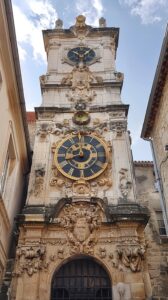
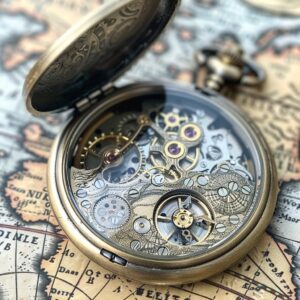
The invention of the watch itself began in the 15th century and cannot be attributed to any single individual as it was a result of multiple inventors over time. This was of course after the invention of the clock mechanism in the late 13th and early 14th century. The more notable inventors of clocks were Richard of Wallingford (1292-1336), an English monk and abbot of St. Albans, who designed and constructed an advanced astronomical clock. He was succeeded by Giovanni de Dandi (1318-1389), an Italian physician and clockmaker who built the Astrarium.


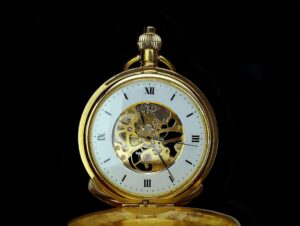
Peter Henlein (1479/1480-1542), a German locksmith and clockmaker was credited with the creation of some of the first timepieces known as Nuremberg Eggs. These timepieces were small, spring-driven and portable. During the late medieval period, this development laid the groundwork for the invention of what we now term watches. The Renaissance period saw significant advancements in science, technology and craftsmanship which benefited the development of more accurate and reliable watches.

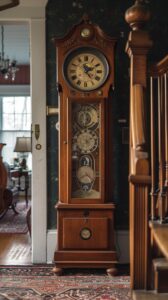
John Harrison (1693-1776), an English carpenter and clockmaker became prominent for his work on marine chronometers which thus allowed sailors to determine longitude whilst at sea. This became crucial for accurate navigation and his advancement on precision timekeeping indirectly influenced the development of more accurate watches.

In 1927, the invention of quartz crystal oscillators brought even greater precision to timekeeping. These Quartz Clocks became widespread due to their reliability and affordability, not to mention their ability to be movable with ease. In 1949, the first atomic clock was built using the vibrations of atoms (usually cesium or rubidium) to keep time. These  are incredibly accurate to modern versions, losing only about one second in millions of years; this was essential for GPS and various scientific applications. Finally Optical clocks (21st century), which use lasers to measure the vibration of atoms or ions at optical frequencies offer an even higher precision than atomic clocks and are at the forefront of current timekeeping research.

Although Peter Heinlein is often credited with the invention of the portable timepiece, it is important to recognise that the evolution of timekeeping devices was a gradual process involving many inventors and innovations over the centuries, beginning with ancient methods of timekeeping to 21st century optical clocks, increasing accuracy tremendously.
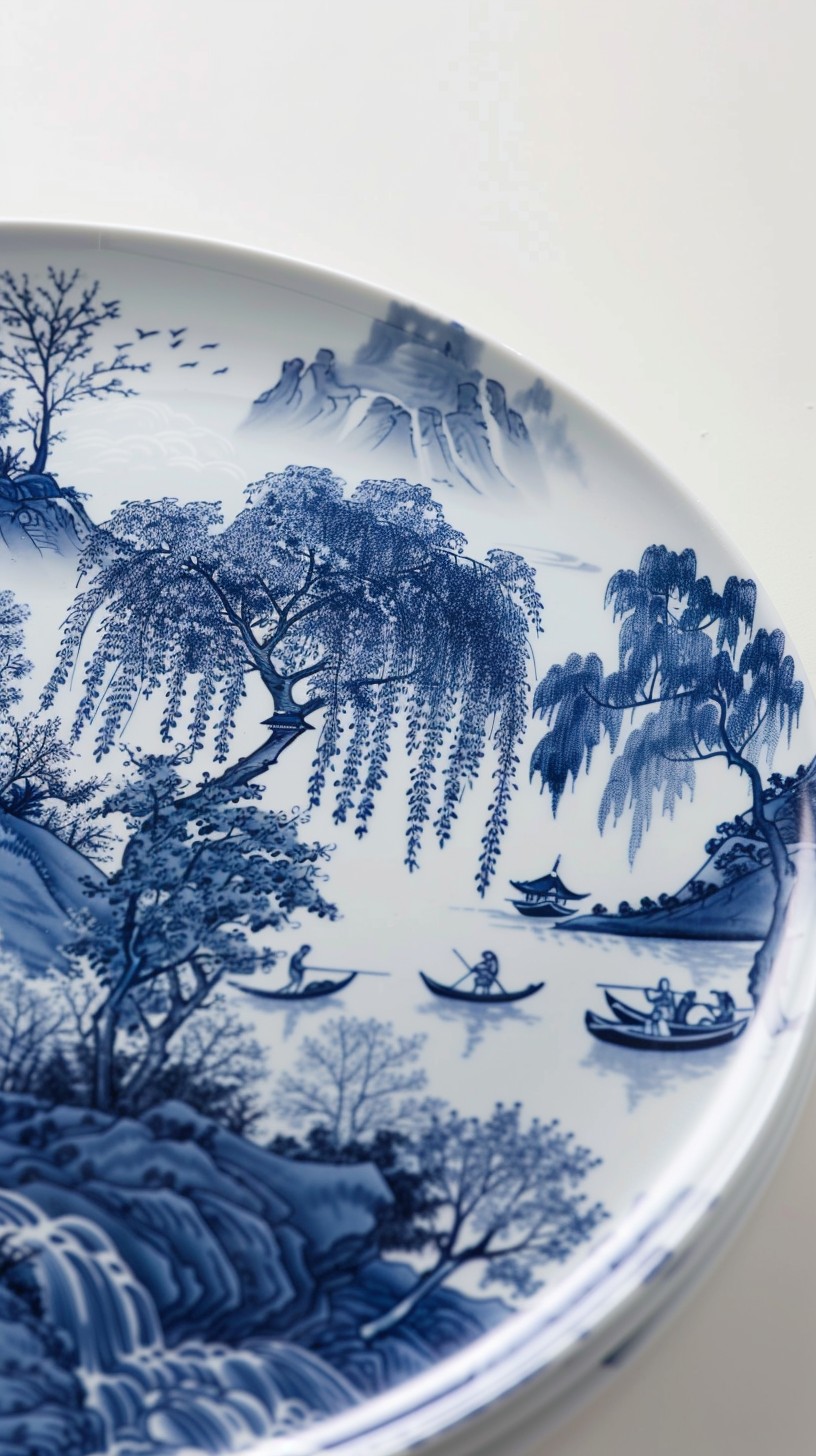
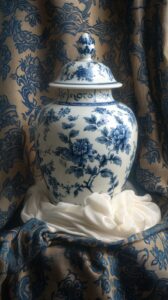
Porcelain dates back to roughly the 8th century where the whiteness and translucency had been achieved. Referred to as “china” rich history that spans over 1000 years. Renowned for its beauty, craftsmanship, and significant influence on global ceramics. Its whiteness and translucency that we see today was achieved around the 8th century. These “china” were exported across the globe making them highly prized.


Beginning with the word ‘ci’ meaning either porcelain or stoneware, it is the skillful transformation of ordinary clay into beautiful objects that captivated the many. 3 pivotal achievements in the Ming and Qing Dynasty were the blue and white porcelain, celadon glazed, and falangcai. Chinese ceramics by far are the most advanced in the world made especially for the imperial court, export, and even for the domestic market.


Ceramics are fired in oxidising (increasing the amount of oxygen) or reduction (reducing the amount of oxygen) during the process. Oxidising is famous in the Northern part of China creating glazes with warm, ivory covered glazes of porcelains whereas reduction is a process used in the Southern part of China creating a more cool, bluish tinge of porcelain.

Early forms of these items began with the proto-porcelain during the Shang & Zhou Dynasties (1600-256 BCE), these pieces were typically grey and unglazed but nevertheless set the foundation for later advancements. The Han Dynasty (206 BCE-220 CE) saw the development of glazed ceramics and introduced green-glazed wares known as ‘Yue ware’ which eventually became popular and even laid the groundwork for future porcelain development. The Tang Dynasty (618-907 CE) was well known for its ‘sancai’ (3 coloured) glazed ceramics used primarily in funerals. This was nevertheless an important mark to the productions of true porcelain (white and translucent) especially in the Northern region. The golden age of Chinese ceramics were considered in the Song Dynasty (960-1279 CE) where famous kilns (furnace houses) like the Ding, Ru, Jun, and Ge produced exquisite porcelain known for their simplicity, elegance and technical perfection. Also notably the celadon wares from the Longquan kilns that became highly prized.

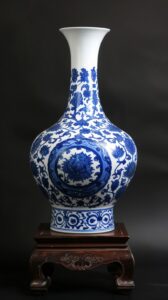
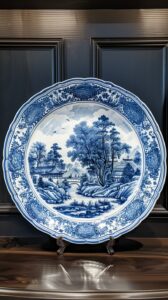
The more famous blue and white porcelain rose to fame in the Yuan Dynasty (1271-1368 CE), using cobalt blue underglaze on white porcelain bodies. This made the Jingdezhen kiln the centre of porcelain production and export across Asia and the Middle East. This refers to high-fired (1300’) white ceramics whose bodies are translucent in appearance and makes a high ringing sound when struck this is in contrast from stoneware which is tougher, non-translucent material fired at a lower temperature (between 1100’ to 1250’). Northern porcelain like that from the Ding kiln were made predominantly of clay rich in Kaolin (a fine soft white clay, resulting from the natural decomposition of other clays or feldspar) this is in contrast with Southern China where porcelain stone was the main material used in making porcelain. It is important to note that the imperial kilns, Jingdezhen, Jiangxi province, Southern China, kaolin was added to the porcelain stone as compared to the Fujian province where the porcelain stone alone was used, resulting in a more dense and compact “china” from the North (Fujian) and a more glassy, sugary version from the South.

Porcelain production reached new heights during the Ming Dynasty (1368-1644 CE). Again the Jingdezhen kilns produced highly refined blue and white porcelain as well as polychrome enamelled wares. This was also the time that the ‘doucai’ (contrasting colours) and ‘wucai’ (five coloured) wares were introduced. Characterised with a range of colours, the Qing Dynasty (1644-1912 CE) continued the tradition of high-quality porcelain. Their range included famille verte (green family), famille rose (pink), and famille noire (black) which became popular. Another notable achievement of this time was the development of the translucent blue glaze called ‘claire-de-lune’.

Chinese porcelain had a profound impact on global ceramics, even influencing styles and techniques in Europe and the Middle East, this was especially noticed during the Ming and Qing Dynasties, where Chinese porcelain was introduced to the western world making it highly coveted. Today Jingdezhen remains a significant centre for porcelain production continuing a millennium long tradition that has long been associated with wealth and  high social status within China and internationally. Their intricate designs and superior craftsmanship have influenced ceramics leading to adaptations globally. Innovations in glazing, kiln technology, and decorative techniques have significantly contributed to the advancement of ceramic arts. Modern Chinese artists and craftsmen blend traditional techniques with contemporary designs ensuring that Chinese porcelain not only remains as a statement to the skill and artistry of Chinese potters but also continues to evolve and inspire.

History of pens is a fascinating journey that traces the evolution of writing instruments from ancient times. The beginning of writing itself was not in the form of words but more of scratches to the surface of moist clay using a bronze tool or a bone tool. From there the earliest form of documentation would be the more known depiction of what happened via pictures by the Egyptians (3000 BCE). Simultaneously for writing on papyrus scrolls, scribes used thin reed (a tall slender-leaved plant that grows in water or in marshy grounds) brushes or reed pens. In 1300 BCE, the Romans began developing a form of writing that they scribed into thin sheets of wax (on wooden tablets) using a metal stylus. When the writing was no longer needed the scribe would rub it off with the flat end of the stylus. This similar method was adopted in Asia but instead of a metal stylus they used a bronze stylus.

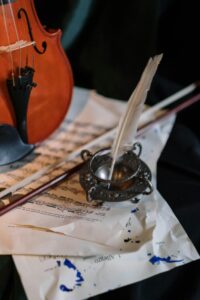
The anglo-saxons used tablets filled with wax for notes and for planning the layout of large books with text alongside parchment. They wrote on the tablets with a metal or bone stylus that had a pointed end and rubbed out the words with the flat end. In medieval Europe (600-1800 CE), popularity rose on quill pens, made from the feathers of large birds like geese, found that writing on a quill pen altered their style of writing. The hollow shaft of the feather held the ink and the tip was cut as a nib. These quill pens first appeared in Seville, Spain beginning with capital letters and moving on to small letters and numbers. In the 1790s the pencil lead was then invented independently in France and Australia. This form of a writing instrument was relatively better than a quill in the sense that there was no risk of ink spills and splashes but like the regular pencil it did not promote a sense of confirmation in terms of much needed and important documents.

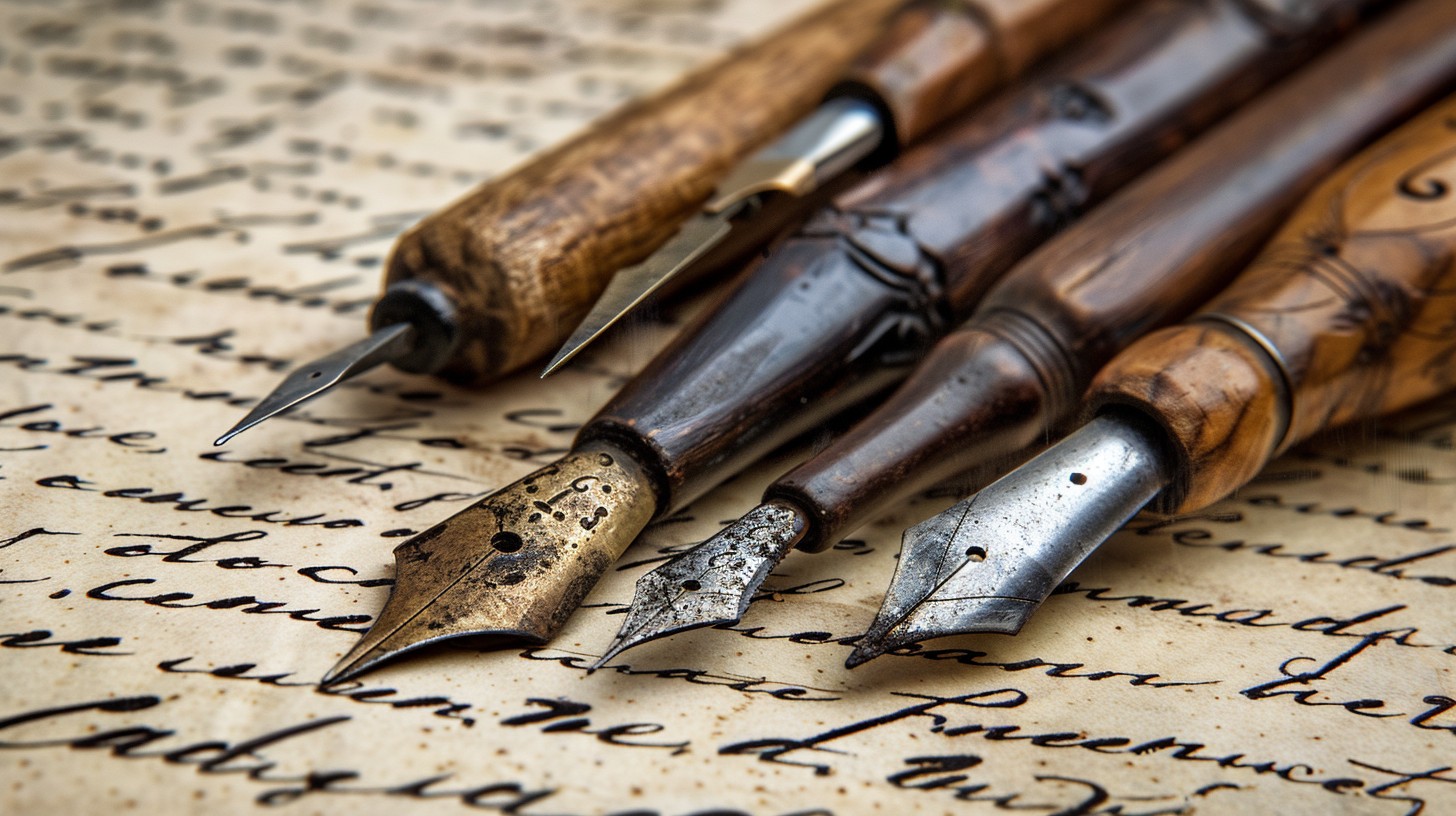
In 1822, an inventor John Mitchell, invented and began mass production of metal nibs (patented in 1803). These metal nibs, made from hard alloys of Iridium, Rhodium, and Osmium, replaced the quill pen by the 19th century. This was attributed to the durability of these nibs as compared to quills. Not long after, in1844, Lewis Waterman, an insurance broker, invented the first ever fountain pen which had an internal ink reservoir that fed ink to the nib through capilari action and with some help from good old gravity.

The more modern version of the ball point pen was invented in 1940 by Josef (Lazlo) and Georg Biro. In summer of 1943, the first commercial models were made, however the patent of Lazlo’s creation was bought over by the British Government. The design of the ball point pen was more rugged which was why sales sky rocketed during WWII as the military needed robust writing material to survive the battlefield environment. This invention was introduced to the US market in 1945 and was sold as the “the first pen to write underwater”. At the Gimbel’s department store in New York on 29th October 1945, some 10,000 units were sold at the launch.

In 1953, a French Baron, Bich (BIC, Co.) developed the industrial process of manufacturing ball point pens, lowering the cost dramatically, making the first inexpensive ball point pens. Tokyo Stationery Company, Japan (1960) invented the first felt tip pen and Papermate’s Flair was among the first to hit the US market and has led since. This set a stepping stone for highlighters. Early 1980s saw the birth of roller ball pens, unlike the thick ink used in the conventional ball point, roller ball pens employ a roller ball and liquid ink, producing a smoother line. In the 1990s onwards companies turned to using rubber to decrease the grip. A much newer patent is that of the ring pen, designed to write without gripping the pens with 3 fingers.

Thus is the evolution of man from scratching on the surface of moist clay to writing without gripping the pen.


The word auction itself is derived from auctus which is the past principle of the Latin word (meaning ‘I increase’). Auctions date back to ancient times and began to take shape in the late Middle Ages and Renaissance period in Europe. In the ancient times, auctions revolved around goods, services, slaves, etc across different cultures. The first mention of auction according to the Oxford English Dictionary is in 1595. England, 17th & 18th Century, auctions by candles were held where the auction ended with the extinguishing of the candle flame so that no one would know exactly when the auction would end and make any last second bids. In 1641 the House of Lords recorded another type of auction in lieu of auction by candles known as footrace. This was again recorded in the year 1660 in the diary of Samuel Pepys where on 2 occasions the admiral sold surplus ships “by an inch of candle”. His diary also recorded a hint from a highly successful bidder who cleverly observed that just before a candle expires, the candle-wick flares up slightly where he would subsequently shout his final bid winning the auction. The first known auction house in the world was the Stockholm Auction House (Stockholms Auktionsverk), Sweden founded by Baron Claes Ralamb in 1674.


By the end of the 18th Century, auctions of artworks were commonly held in taverns and coffeehouses. These would resemble the more modern auctions we have as the auctions we held daily, auction catalogs printed to announce available items, and in some cases, these catalogs were by themselves elaborate works of art, containing considerable detail on items on auction. The Great Slave Auction in 1859 was recorded as the world’s largest single sale of enslaved persons in the US with 436 men, women, and children being sold. Another fact to note would be that some auctioneers in the US are known as ‘Colonel’ till today since goods seized by armies during the American Civil War were sold by the Colonel of the division. Southern American Tobacco auctions in the late 19th Century, had a mixed auction style, Traditional 17th Century England combined with chants of slaves from Africa.


Some of the more notable ancient auctions that is recorded are for example:-

Ancient Mesopotamia & Babylon [as early as 500 BCE] – Babylonian Marriage Market 1875 depicted by Edwin Long, where annual auctions held were women for marriage. Auctions began with women that we’re regarded as most beautiful by the auctioneer (forward auction) progressing to less attractive maidens (reverse auction) to determine the price to be paid to a swain (young peasant suitor) contrary to the forward auction where the price of the maiden is paid by the swain.

Ancient Rome [between 1st century to 4th century BCE] – auctions known as auctiones were held after a military victory, where Roman soldiers would drive a spear (symbolising a public auction and authority of the state) into the ground, around the spoils of war, to be auctioned off. The auctioneer was called a ‘praeco’. These auctions included soldiers and captives as ‘spoils of war’ alongside all other military equipment/spoils, and property, proceeds of the auction went towards their war effort. The most famous auction was the sale of the Roman Empire, on 28th March 193 a Praetorian Guard who killed emperor Pertinax which subsequently led to the sale of the throne to Didius Julianus, the highest bidder at 6250 drachmas per guard, initiating a brief civil war. Didius was beheaded 2 months later leaving the empire to Septimius Severus. The Romans also used auctions to liquidate assets of debtors whose property had been confiscated, for example Marcus Aurelius who sold household furniture to pay off his debts.

Ancient Greece [5th Century BCE] – sales of property, slaves and goods were held in an auction known as an ascending bid where the highest bidder wins the woman (similar to the modern day auction)

Ancient China [618 to 907 BCE] – it has been recorded that the personal belongings of deceased Buddhist Monks were sold at auctions as early as the 7th century. Namely the Tang Dynasty where auctions were used to sell goods, property, and Chinese calligraphy artworks.This resulted in the Chinese developing sophisticated auction techniques and auction houses. Auctions thus became an integral part of the Chinese economy and evolved over the centuries.

Ancient India [Various periods] – Ancient Indian texts have recorded the sale of goods and property through an auction-like method. Public auctions were conducted for land, livestock and other items of value. Auctions were depicted as a way to ensure transparency and fair pricing in the sale of goods.

The Key characteristics of auctions during the ancient times are:-

Public – Auctions were held in public spaces ensuring transparency and attracting multiple bidders.

Variety – A large variety of auctions including slaves, land, households, artwork, women (for marriage), military spoils, and even everyday goods.

Auctioneers – Special individuals or officials e.g. the preaco in Rome appointed to host the auction.

Bidding – Similar to some modern auctions where bidders place bids by verbal or a show of hands.

Cultural – Auctions were not just economic transactions but also portrayed social and political implications such as the Roman practice of auctioning war spoils.

Benefits of Auctions (in contrast with barter trade system) :-

Facilitating transparent and competitive price discovery – highest bidder determines the price thus reflecting the current market value of the item.

Immediate liquidity – sellers can convert their items to cash.

Standardized rules and procedures – making transactions straight forward and predictable.

Wide participation – increasing the chance of success.

Efficient in terms of time and effort – bidding process is straightforward and the item sold to the highest bidder without prolonged negotiation.

Flexibility – exchange of goods and services may not always be feasible, nor convenient.

Fair and transparent – open bidding processes ensure fairness and transparency.

Specialization and division of labor – barter limits specialization because individuals must produce what they need or find suitable candidates who possess what they need and are willing to accept what they have in exchange.

Scalability – Limited in barter exchange as it is reliant on finding matching needs of two individuals.


In conclusion, auctions in ancient times proved to be an integral part of the economies and societies of many cultures. They facilitated the sale and distribution of a wide range of goods and services, from slavery to property, to marriage contracts and military spoils. The basic principles of auctions – competitive bidding, transparency, and public participation – have remained consistent through the centuries, evolving into the complex, diverse auction systems we see today. Also in contrast with the much renowned barter trade system of ancient times, the auction proves to have significant benefits. These benefits made auctions a more practical and efficient method in ancient times. It also set the standard on valuation of historical, cultural, and valuable items.